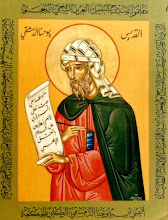
As there is not a single superfluous word in the Church's Divine Services, it is especially necessary at the time of the singing of the Litany of Fervent Supplication (the "Ecumenic Petitions") to pray to God most fervently, from the very depths of a most contrite heart, as we are reminded at the very beginning of the litany by the words: "Let us all say with our whole souls and with our whole mind, let us all say...."
St. John of Kronstadt
We would do well to have St John's phronema when preparing liturgical texts or celebrating the Divine Services, especially when tempted to view "economy" in terms of brevity, 'simplification', and removal of the "unnecessary". If we are truthful in claiming we desire to stand on the right hand on the Day of Resurrection, spending a few extra minutes in Church should not be a burden. Father Paul Tarazi recalled that once when he was asked why we chant "Lord, have mercy" forty times, that he replied, "Forty? Why not Four hundred times?!" When I find myself bored in church, I should ask myself why does it seem so to me, not why is it taking so long.
Showing posts with label Divine Liturgy. Show all posts
Showing posts with label Divine Liturgy. Show all posts
Saturday, February 27, 2010


Monday, February 01, 2010
A Critique of the Melkite English Divine Liturgy Project's "Final Draft"
This critique references the edition of the Common Language Translation of the Divine Liturgy of Saint John Chrysostom as promulgated 27 January 2009 by the Eparchy of Newton for Melkites in the USA
From the beginning, our little community has participated in the trial use of the several editions of the Common Language Translation project for English-speaking Melkites. With each new released edition, we have taken full advantage of the options permitted and tried them all out at least once. Ultimately, we have returned to the traditional 'options' and practices that have proven themselves efficacious for all Byzantine Rite Christians following the Typikon of the Great Church. That said, a review of the project's "Final Draft" is in order.
THE FINAL DRAFT AND PROCESS OF ESTABLISHING A COMMON ENGLISH TRANSLATION FOR ALL BYZANTINE RITE CHRISTIANS
The goal of a common text of the Divine Liturgy for English-speaking members of the Melkite Greek Catholic Church is a laudable one. A tragedy for the development of Byzantine Christianity in the Americas and other English-speaking regions has been the history of ad hoc translating, with both Catholic and Orthodox jurisdictions acting independently, and some jurisdictions producing various efforts of individuals having no coordination or support from the hierarchy. It is not uncommon to find that one jurisdiction may have two, five or more ‘approved’ (or commonly employed) translations each featuring twists of phrasing, anomalies and idiosyncrasies. This discordant reality makes a visit to another parish of ones own jurisdiction an adventure in attempting to avoid stumbling over linguistic variations not encountered in ones own parish. Compound this with the number of translations produced by ‘other’ jurisdictions and the frustration and confusion of the laity across the board becomes easily appreciated.
The fact that English is one of the few modern languages experiencing this frustrating, and spiritually stunting, situation is understandable given the historic context of the waves of distinct immigrations to the “New World”. The various small pockets of individual Eastern Christian communities were typically viewed by their “Old World” hierarchy as living in diasporas. Thus, they were encouraged to continue using the old language versions of the Divine Services and prayers rather than to produce English editions for the generations that would follow. Thus, while other linguistic nations moved to produce suitable translations in the new language, many of which have become the standard used by all Byzantine tradition Christians speaking said language, one may literally fill a bookcase with the numerous English editions of the Divine Liturgy produced by various Orthodox and Catholic jurisdictions over the years, each featuring their own merits and deficits, their own inspiring turns of phrase, their own clumsy or downright incomprehensible translations.
Given this historic context, the new Common English Language translation project by the Melkites is laudable in its intentions. One could take from the very fact of the project a hope that once finalized the resulting product might provide the springboard for the production of a common English translation for all Byzantine Rite Catholics. Indeed, one could dream of the day in which such efforts would lead to a definitive English edition that all Byzantine Christians, Orthodox and Catholic, could agree on for their jurisdictions’ regular worship.
Accepting the wholesomeness of the goal to produce a standard edition of the Divine Liturgy for English-speaking Melkites, it is in order to consider the results of the efforts made thus far. This is particularly important now as the currently released edition is proclaimed the “final draft”. Therefore a careful review of the draft’s accuracy of text, rubrics, and format deserves serious review. In addition, and more importantly, the quality of the English text that is being promulgated needs very careful consideration.
THE FINAL DRAFT – ITS GOALS, LIMITATIONS ON THE PROJECT AND RESULTANT TRANSLATION ISSUES
For the US edition of the Final Draft, the Eparch has provided an “Instruction” that serves as a general introduction as well as explanation for the selection of several particular translation choices. The Instruction notes that the English translation is the result of a process that began with the “the official Greek text”, followed by “the official Arabic translation as approved by the Melkite Holy Synod in 2005". The English translation is portrayed as the next step in the process of bringing to the vernacular the fruits of the Apostolic Tradition embodied in the original texts.
Emphasis immediately must be given to the fact that the translators were required to produce an English translation that conformed to the Arabic in all particulars rather than the “official Greek text”. The significance for this is understandable, but ultimately controversial. In terms of the particular customs and idiosyncrasies of the Melkite usage, it is natural that following the Arabic texts approved by the Holy Synod is a commendable choice. However, for the text of the Liturgy itself, such an approach is problematic; the English Final Draft is a translation of a translation. This is the very criticism of such English language Bible translations as the Douay, the Confraternity Edition, and the original translation of the Jerusalem Bible. While not condemnatory in and of itself, such an approach should always be guided by reference to the original text, and where peculiarities or questions arise weight be properly given to the original. (Note that this approach would actually strengthen the argument for reliance on the Septuagint as the basis for English translations of the Old Testament rather than relying on Hebrew, and in particular the Masoretic text.) There are nuances in every word and turn of phrase in any language that when employed can convey more accurately the originals meaning in translation; but if the translation is used as the authorized text for translation into a third language the resulting phrasing may be completely misleading.
The quintessential example of this is in the case of the Final Draft is the choice to use “now and always and forever and ever” versus the traditional English rendering “now and ever and to the ages of ages”. The stated justification for this choice in the Instruction is “that every major modern translation of these words in Scripture…employs the former, forever and ever.” One could be forgiven for viewing this choice as trivial. However, the original Greek Scriptures, the Divine Services and various commentaries of the Church Fathers use the term translated “ages” with specific import and meaning. In Greek the phrase “now and ever” or “now and always” already conveys the sense of “forever” before including the phrase “ages of ages”.
The term “age” in Greek has specific connotations indicating more than the simple measuring of time, and to render the phrase as “for ever and ever” is as potentially misleading as assuming that “era” carries no significant distinction than, say, “recent years”. (Please note that “forever” is specifically and consistently rendered “for ever” in the Revised Standard Version hinting at the distinction of “unto ages” versus “forever” in the original Greek.) “To the ages of ages” indicates not just an endless passage of time, but the taking into account of every age, era and circumstance. It clarifies the glory due to God as possessing a fullness that extends beyond all created realities. Thus, the selection of “for ever and ever” subtracts from translational accuracy and weakens the theological import of the original Greek.
Similarly, the substitution of “forgive me” for the expression “be propitious to me” is justified in the “Instruction” as being “clear and accessible in conveying the same meaning”. In fact, this simply is not so. The term propitious implies kindness, mercy and a favorable disposition. Thus, traditional (commonly chosen) English translations have utilized phrases such as “have mercy on me and forgive me” or “be propitious to me and forgive me”. The simplification (reduction) of the phrase to “forgive me” alone removes the dialogic framework of the prayer, actually omits the reference to God’s great mercy, and thereby ignores the very reason one can ask to be forgiven. This is at best a deficient paraphrase and at worst a gross lack of fidelity to the original.
Other examples of poor translation can be seen in the hymn to the Theotokos “It is truly right”. The translation’s text betrays an inferior understanding of the Incarnation by choosing “you gave birth to God the word in virginity” versus the more accurate translation “without corruption you gave birth to God the Word”. The word “corruption” is an exact translation of the Greek, which does not refer to sexual intercourse but rather the general corruption of human nature. It therefore conveys the truth that the Virgin conceived and gave birth to our Lord without the corruption of ancestral sin.
It must also be noted that the translation ends: “You are truly Theotokos, you do we exalt.” Given that in context the English word “magnify” is a direct translation of the Greek and, indeed, one may argue a cognate term, the justification for using “exalt” can only be that it happens to be the inferior term used by Baron De Vinck and Archbishop Raya (of blessed memory) in their original translations over a half century ago.
THE FINAL DRAFT AND INJUDICIOUS TRANSLATION DECISIONS
These examples demonstrate the principle difficulty with the translation. The translators were apparently restricted to conform their work to a translation (Arabic) of the original (Greek) instead of working directly from that original. To this was coupled the problem that the project freely borrows from pre-existing English-speaking Melkites translations. These prior works produced by translators for whom English was not their primary language, often employ awkward phraseology. These two facts combine to weaken the translation in many ways.
For example, a typical Ekphonesis (doxological conclusion to a prayer) in the Final Draft reads, “That being ever protected by Your power we may render glory to You, Father, Son and Holy Spirit, now and always and forever and ever.” The issue here is the absence of prepositions and articles for “Father, Son and Holy Spirit.” In Greek, “to the” is clearly implied by the repetition of the conjunction “and”. An exact word for word translation of the phrase from Greek would be “to (the) Father and (to the) Son and (to the) Holy Spirit…” The Greek nouns used in such a construction clearly indicate a comprehension that 'reads' “to the Father and to the Son and to the Holy Spirit”. The inflected form of the nouns carries the prepositional connection with it.
It begs the question to ask why the option to translate Trinitarian references using fuller, more majestic phrasing was passed over. One can only assume that to one for whom English is a second or third language the nuanced differences in English syntactical construction went unnoticed. However, the lack of the full prepositional phrases in the conjunction weakens the Trinitarian emphasis inherent in the original Greek. As translated in the Final Draft the Trinitarian reference could too easily be misinterpreted as modalistic rather than hypostatic.
Again, the problem originates in the directive to produce a text that mirrored the Arabic as exactly as possible. It seems that the majority of the editors, having English as a second or third language, misunderstood the impact of narrowing of the phrase would threaten to have on weakening the Trinitarian reference for the English worshipper and opted to approve a phrasing that mirrors the ‘letter’ of the source but diminishes theological nuance in the product. In the Final Draft’s phrasing of almost all Ekphoneses, the Persons of the Trinity grammatically become almost an afterthought. A more thorough acquaintance with English would have avoided this. A more careful adherence to the original Greek would have necessarily precluded it altogether.
The fault is in the directive to work from the Arabic instead of the Greek. A more rational approach would have been to translate from the Greek and compare the results with the Arabic. This would have undoubtedly produced a more accurate work in English while allowing for reasonable conformity with the Arabic.
RUBRICS, OPTIONS AND FORMATS
One distinctive problem with the released edition of the Final Draft is absence of rubrics. By definition, rubrics provide clear explanation of the movements and actions accompanying the text of the ritual. Unfortunately, the Final Draft provides vague descriptions of the teleturgical action that in no way promote basic conformity amongst the English-speaking clergy. The aim seems to have been to provide the laity with a basic understanding of what the clergy are doing during at any particular moment in the Liturgy. However, as with earlier drafts, the officially released volume is organized like a study text. The liturgical flow is repeatedly interrupted by ‘rubrics’ that diverge to note various options requiring the worshipper to anticipate which option a particular community follows and know how far to skip ahead to keep up with the given celebration. While earlier drafts at least occasionally noted the options and place more detailed information at the end of the volume, the Final Draft seeks to provide information about various optional practices in great detail at the exact point in the text of the liturgy wherein they occur. The result is an extremely unfriendly user’s edition. (A side note: As no discussion has yet been formalized concerning a ‘definitive’ translation of the Divine Liturgy of St Basil the Great, it is curious that several prayers from that Liturgy are included in the work under consideration.)
Amongst the various options allowed for the antiphons after the open litanies, the Final Draft does allow the Beatitudes along with the basic stichera from the Octoechos. This is extremely welcome as it allows the laity to experience more of the rich hymnody of the Church, with perhaps a goal of encouraging more participation in the offering of Great Vespers, Orthros or other Divine Services that sadly tend to be forgotten in many Melkite communities today. It must be noted, however, that for a project that intends to unite the English-speaking Melkites in using one text with specifically delineated options, it is somewhat ironic that at the end of the Beatitudes in each Tone the text includes two separate translations of its Troparion of the Resurrection. Obviously no consensus has been reached on a standard text for these commonly used troparia.
This also brings to the fore the question of the legitimacy of some of the options themselves. Here and there options are presented that obviously reflect the spirit of the Roman Church's post-Vatican II ‘people’s participation’. For example, the Ektene after the homily presents an option in which ‘readers’ chosen from the laity stand in the “middle aisle” facing each other and offer petitions from a large collection at the end of the volume. (The text is silent whether additional ‘made up’ petitions are allowed.) In short, a practice is being introduced that is a direct copy of the Roman Novus Ordo practice of "general intercessions" after the homily – a practice that is, to my knowledge, without precedent in the Byzantine Tradition.
The directions for the litanies after the homily also are troublesome from a theological perspective. The Litany of the Catechumens is directed to be done only “if there are Catechumens” present, and only one of the Prayers of the Faithful is to be included “(for brevity)”. This emphasis on 'brevity' extends to the introduction to the Holy Creed, directing that “if” there are Catechumens the traditional exclamation, “The Doors! The Doors!” is to be used, but otherwise omitted. The problem here is that it is debatable whether the “The Doors! The Doors!” ever related to the catechumens, given that they presumably were dismissed earlier, before the Great Entrance. Rather the exclamation was a warning to ensure that non-Christians not be admitted to the celebration of the Eucharist and Holy Communion. Thus, the exclamation has traditionally served as a reminder to worshippers of times of past persecution and the superlative holiness of the liturgical actions that will follow.
As to the omission of the Litany of the Catechumens and editing of the two Litanies of the Faithful "for brevity", the time factor in their inclusion amounts to a mere two or three minutes. Also, one must consider the spiritual possibility that whether present or not, the Church should always offer prayers for catechumens, recognizing that there are perhaps many whom our Lord is leading to His Church who have yet to realize this and so have not yet participated in the Divine Services. Offering this litany confirms our prayers to strengthen those 'invisible catechumens' whom we may not even know but whom God will lead to join with us in the future. It also reminds us of our duty to proclaim the Gospel in our whole life, not just in church, and thus encourages us to give daily witness to the True Faith such that those invisible catechumens may be inspired to come forward. Reflecting on the call to evangelism, omitting the Litany of the Catechumens could be said to border on sacrilege.
When viewed together, it seems that the various optional directions in the Final Draft combine to promote a Liturgy significantly influenced by the current Roman Rite Mass. While a few of the options present legitimate variations in the customary practice of the Church, most have the effect of encouraging a ‘shortening’ of the Liturgy to suit modern sensibilities and convenience or to promote a more "people friendly" (to wit, emotionally moving rather than spiritually uplifting) experience. During the reception of Holy Communion by the laity, there is even a note allowing the singing of “spiritual hymns” after the singing of “Receive me now, O Son of God”. One shudders at the thought of chanters or a choir singing “And He Will Lift You Up on Eagles Wings” at this most sacred moment!
This brings us to the final issue to be addressed in critiquing the Final Draft – the Melkite translation of the hymnody of the Church in general. The Melkites are to be congratulated for being among the first to produce handy, relatively inexpensive editions of almost the entire Byzantine hymnological corpus. The Octoechos, Menaion, Triodion, etc. have all been published, with nearly each now being in a second edition that has corrected and expanded the material contained therein. In fact, a volume for Holy Week and the General Menaion, are the only books still needing to be published.
The only objections to these important and essential volumes are the absence of sturdy hardbound editions of sufficient quality for long term use at the Psalterion and the rather pedestrian language used throughout. As I am not familiar with the text of these books in Arabic, I can only note that in comparison to the Greek, and translations based directly on the Greek, most of the troparia and stichera in the Melkite hymn books read as sufficient paraphrases, albeit devoid of the poetic elegance found in many other translations. That said, these books do present the material in serviceable English and the translators and hierarchy authorizing them are to be highly commended!
In conclusion, the Final Draft of the Melkite Divine Liturgy of St John Chrysostom is a usable but flawed project. As a volume intended for direct use in the worship of the Church it is neither fish nor fowl, neither presenting exact rubrical information for the clergy nor clear easy to follow formatting for the laity. One could make the case that once finalized, the volume could form the basis for specifically designed editions prepared for the clergy, the laity, and chanters/choir usage although some comment has been made that this is not planned.
In its current format the Final Draft is impractical and certainly not recommended for someone attending Melkite Divine Services for the first time. One can only hope that the hierarchy of the English-speaking Eparchies will reconsider some of the decisions that have led to the current edition, both in terms of layout, rubrics/descriptions and translation choices, and go one more round before considering the project finished. A bit of extra time and work now would undoubtedly result in a much more refined product with long-lasting potential.
One final suggestion would be that where commonly recognized English texts have been used in Byzantine churches (Catholic or Orthodox) for generations, consideration could be made to utilize these or else model specific Melkite texts on them, instead of presuming the necessity of a unique translation in every instance.
Our thanks to the translators, editors, and all others who have dedicated so much time, effort, and prayer to this project. These considerations are made not to criticize individuals but, God willing, to inspire the Melkite Church to even greater work on this most important project. The future sustainability and growth of the Melkite Church outside the Middle East depends entirely on such God-pleasing work and the recognition that Antiochian Christianity must be allowed to embrace all people, regardless of their ethnic heritage, with equal openness to that offered by the Roman Church. As with recent directives and clarification of intentions from the Holy See for translations of the Roman Rite, Churches of the Byzantine Tradition, regardless of the intermediary historic origins, need to start fresh from the Greek in seeking to produce vernacular translations, making reference to the ethnic 'intermediary' language as necessary. To do otherwise will only result in more inadequate translations and the generational loss of members who neither maintain fluency with the "original" ethnic language nor are given the opportunity to encounter the purity and majesty of the original Greek.
From the beginning, our little community has participated in the trial use of the several editions of the Common Language Translation project for English-speaking Melkites. With each new released edition, we have taken full advantage of the options permitted and tried them all out at least once. Ultimately, we have returned to the traditional 'options' and practices that have proven themselves efficacious for all Byzantine Rite Christians following the Typikon of the Great Church. That said, a review of the project's "Final Draft" is in order.
THE FINAL DRAFT AND PROCESS OF ESTABLISHING A COMMON ENGLISH TRANSLATION FOR ALL BYZANTINE RITE CHRISTIANS
The goal of a common text of the Divine Liturgy for English-speaking members of the Melkite Greek Catholic Church is a laudable one. A tragedy for the development of Byzantine Christianity in the Americas and other English-speaking regions has been the history of ad hoc translating, with both Catholic and Orthodox jurisdictions acting independently, and some jurisdictions producing various efforts of individuals having no coordination or support from the hierarchy. It is not uncommon to find that one jurisdiction may have two, five or more ‘approved’ (or commonly employed) translations each featuring twists of phrasing, anomalies and idiosyncrasies. This discordant reality makes a visit to another parish of ones own jurisdiction an adventure in attempting to avoid stumbling over linguistic variations not encountered in ones own parish. Compound this with the number of translations produced by ‘other’ jurisdictions and the frustration and confusion of the laity across the board becomes easily appreciated.
The fact that English is one of the few modern languages experiencing this frustrating, and spiritually stunting, situation is understandable given the historic context of the waves of distinct immigrations to the “New World”. The various small pockets of individual Eastern Christian communities were typically viewed by their “Old World” hierarchy as living in diasporas. Thus, they were encouraged to continue using the old language versions of the Divine Services and prayers rather than to produce English editions for the generations that would follow. Thus, while other linguistic nations moved to produce suitable translations in the new language, many of which have become the standard used by all Byzantine tradition Christians speaking said language, one may literally fill a bookcase with the numerous English editions of the Divine Liturgy produced by various Orthodox and Catholic jurisdictions over the years, each featuring their own merits and deficits, their own inspiring turns of phrase, their own clumsy or downright incomprehensible translations.
Given this historic context, the new Common English Language translation project by the Melkites is laudable in its intentions. One could take from the very fact of the project a hope that once finalized the resulting product might provide the springboard for the production of a common English translation for all Byzantine Rite Catholics. Indeed, one could dream of the day in which such efforts would lead to a definitive English edition that all Byzantine Christians, Orthodox and Catholic, could agree on for their jurisdictions’ regular worship.
Accepting the wholesomeness of the goal to produce a standard edition of the Divine Liturgy for English-speaking Melkites, it is in order to consider the results of the efforts made thus far. This is particularly important now as the currently released edition is proclaimed the “final draft”. Therefore a careful review of the draft’s accuracy of text, rubrics, and format deserves serious review. In addition, and more importantly, the quality of the English text that is being promulgated needs very careful consideration.
THE FINAL DRAFT – ITS GOALS, LIMITATIONS ON THE PROJECT AND RESULTANT TRANSLATION ISSUES
For the US edition of the Final Draft, the Eparch has provided an “Instruction” that serves as a general introduction as well as explanation for the selection of several particular translation choices. The Instruction notes that the English translation is the result of a process that began with the “the official Greek text”, followed by “the official Arabic translation as approved by the Melkite Holy Synod in 2005". The English translation is portrayed as the next step in the process of bringing to the vernacular the fruits of the Apostolic Tradition embodied in the original texts.
Emphasis immediately must be given to the fact that the translators were required to produce an English translation that conformed to the Arabic in all particulars rather than the “official Greek text”. The significance for this is understandable, but ultimately controversial. In terms of the particular customs and idiosyncrasies of the Melkite usage, it is natural that following the Arabic texts approved by the Holy Synod is a commendable choice. However, for the text of the Liturgy itself, such an approach is problematic; the English Final Draft is a translation of a translation. This is the very criticism of such English language Bible translations as the Douay, the Confraternity Edition, and the original translation of the Jerusalem Bible. While not condemnatory in and of itself, such an approach should always be guided by reference to the original text, and where peculiarities or questions arise weight be properly given to the original. (Note that this approach would actually strengthen the argument for reliance on the Septuagint as the basis for English translations of the Old Testament rather than relying on Hebrew, and in particular the Masoretic text.) There are nuances in every word and turn of phrase in any language that when employed can convey more accurately the originals meaning in translation; but if the translation is used as the authorized text for translation into a third language the resulting phrasing may be completely misleading.
The quintessential example of this is in the case of the Final Draft is the choice to use “now and always and forever and ever” versus the traditional English rendering “now and ever and to the ages of ages”. The stated justification for this choice in the Instruction is “that every major modern translation of these words in Scripture…employs the former, forever and ever.” One could be forgiven for viewing this choice as trivial. However, the original Greek Scriptures, the Divine Services and various commentaries of the Church Fathers use the term translated “ages” with specific import and meaning. In Greek the phrase “now and ever” or “now and always” already conveys the sense of “forever” before including the phrase “ages of ages”.
The term “age” in Greek has specific connotations indicating more than the simple measuring of time, and to render the phrase as “for ever and ever” is as potentially misleading as assuming that “era” carries no significant distinction than, say, “recent years”. (Please note that “forever” is specifically and consistently rendered “for ever” in the Revised Standard Version hinting at the distinction of “unto ages” versus “forever” in the original Greek.) “To the ages of ages” indicates not just an endless passage of time, but the taking into account of every age, era and circumstance. It clarifies the glory due to God as possessing a fullness that extends beyond all created realities. Thus, the selection of “for ever and ever” subtracts from translational accuracy and weakens the theological import of the original Greek.
Similarly, the substitution of “forgive me” for the expression “be propitious to me” is justified in the “Instruction” as being “clear and accessible in conveying the same meaning”. In fact, this simply is not so. The term propitious implies kindness, mercy and a favorable disposition. Thus, traditional (commonly chosen) English translations have utilized phrases such as “have mercy on me and forgive me” or “be propitious to me and forgive me”. The simplification (reduction) of the phrase to “forgive me” alone removes the dialogic framework of the prayer, actually omits the reference to God’s great mercy, and thereby ignores the very reason one can ask to be forgiven. This is at best a deficient paraphrase and at worst a gross lack of fidelity to the original.
Other examples of poor translation can be seen in the hymn to the Theotokos “It is truly right”. The translation’s text betrays an inferior understanding of the Incarnation by choosing “you gave birth to God the word in virginity” versus the more accurate translation “without corruption you gave birth to God the Word”. The word “corruption” is an exact translation of the Greek, which does not refer to sexual intercourse but rather the general corruption of human nature. It therefore conveys the truth that the Virgin conceived and gave birth to our Lord without the corruption of ancestral sin.
It must also be noted that the translation ends: “You are truly Theotokos, you do we exalt.” Given that in context the English word “magnify” is a direct translation of the Greek and, indeed, one may argue a cognate term, the justification for using “exalt” can only be that it happens to be the inferior term used by Baron De Vinck and Archbishop Raya (of blessed memory) in their original translations over a half century ago.
THE FINAL DRAFT AND INJUDICIOUS TRANSLATION DECISIONS
These examples demonstrate the principle difficulty with the translation. The translators were apparently restricted to conform their work to a translation (Arabic) of the original (Greek) instead of working directly from that original. To this was coupled the problem that the project freely borrows from pre-existing English-speaking Melkites translations. These prior works produced by translators for whom English was not their primary language, often employ awkward phraseology. These two facts combine to weaken the translation in many ways.
For example, a typical Ekphonesis (doxological conclusion to a prayer) in the Final Draft reads, “That being ever protected by Your power we may render glory to You, Father, Son and Holy Spirit, now and always and forever and ever.” The issue here is the absence of prepositions and articles for “Father, Son and Holy Spirit.” In Greek, “to the” is clearly implied by the repetition of the conjunction “and”. An exact word for word translation of the phrase from Greek would be “to (the) Father and (to the) Son and (to the) Holy Spirit…” The Greek nouns used in such a construction clearly indicate a comprehension that 'reads' “to the Father and to the Son and to the Holy Spirit”. The inflected form of the nouns carries the prepositional connection with it.
It begs the question to ask why the option to translate Trinitarian references using fuller, more majestic phrasing was passed over. One can only assume that to one for whom English is a second or third language the nuanced differences in English syntactical construction went unnoticed. However, the lack of the full prepositional phrases in the conjunction weakens the Trinitarian emphasis inherent in the original Greek. As translated in the Final Draft the Trinitarian reference could too easily be misinterpreted as modalistic rather than hypostatic.
Again, the problem originates in the directive to produce a text that mirrored the Arabic as exactly as possible. It seems that the majority of the editors, having English as a second or third language, misunderstood the impact of narrowing of the phrase would threaten to have on weakening the Trinitarian reference for the English worshipper and opted to approve a phrasing that mirrors the ‘letter’ of the source but diminishes theological nuance in the product. In the Final Draft’s phrasing of almost all Ekphoneses, the Persons of the Trinity grammatically become almost an afterthought. A more thorough acquaintance with English would have avoided this. A more careful adherence to the original Greek would have necessarily precluded it altogether.
The fault is in the directive to work from the Arabic instead of the Greek. A more rational approach would have been to translate from the Greek and compare the results with the Arabic. This would have undoubtedly produced a more accurate work in English while allowing for reasonable conformity with the Arabic.
RUBRICS, OPTIONS AND FORMATS
One distinctive problem with the released edition of the Final Draft is absence of rubrics. By definition, rubrics provide clear explanation of the movements and actions accompanying the text of the ritual. Unfortunately, the Final Draft provides vague descriptions of the teleturgical action that in no way promote basic conformity amongst the English-speaking clergy. The aim seems to have been to provide the laity with a basic understanding of what the clergy are doing during at any particular moment in the Liturgy. However, as with earlier drafts, the officially released volume is organized like a study text. The liturgical flow is repeatedly interrupted by ‘rubrics’ that diverge to note various options requiring the worshipper to anticipate which option a particular community follows and know how far to skip ahead to keep up with the given celebration. While earlier drafts at least occasionally noted the options and place more detailed information at the end of the volume, the Final Draft seeks to provide information about various optional practices in great detail at the exact point in the text of the liturgy wherein they occur. The result is an extremely unfriendly user’s edition. (A side note: As no discussion has yet been formalized concerning a ‘definitive’ translation of the Divine Liturgy of St Basil the Great, it is curious that several prayers from that Liturgy are included in the work under consideration.)
Amongst the various options allowed for the antiphons after the open litanies, the Final Draft does allow the Beatitudes along with the basic stichera from the Octoechos. This is extremely welcome as it allows the laity to experience more of the rich hymnody of the Church, with perhaps a goal of encouraging more participation in the offering of Great Vespers, Orthros or other Divine Services that sadly tend to be forgotten in many Melkite communities today. It must be noted, however, that for a project that intends to unite the English-speaking Melkites in using one text with specifically delineated options, it is somewhat ironic that at the end of the Beatitudes in each Tone the text includes two separate translations of its Troparion of the Resurrection. Obviously no consensus has been reached on a standard text for these commonly used troparia.
This also brings to the fore the question of the legitimacy of some of the options themselves. Here and there options are presented that obviously reflect the spirit of the Roman Church's post-Vatican II ‘people’s participation’. For example, the Ektene after the homily presents an option in which ‘readers’ chosen from the laity stand in the “middle aisle” facing each other and offer petitions from a large collection at the end of the volume. (The text is silent whether additional ‘made up’ petitions are allowed.) In short, a practice is being introduced that is a direct copy of the Roman Novus Ordo practice of "general intercessions" after the homily – a practice that is, to my knowledge, without precedent in the Byzantine Tradition.
The directions for the litanies after the homily also are troublesome from a theological perspective. The Litany of the Catechumens is directed to be done only “if there are Catechumens” present, and only one of the Prayers of the Faithful is to be included “(for brevity)”. This emphasis on 'brevity' extends to the introduction to the Holy Creed, directing that “if” there are Catechumens the traditional exclamation, “The Doors! The Doors!” is to be used, but otherwise omitted. The problem here is that it is debatable whether the “The Doors! The Doors!” ever related to the catechumens, given that they presumably were dismissed earlier, before the Great Entrance. Rather the exclamation was a warning to ensure that non-Christians not be admitted to the celebration of the Eucharist and Holy Communion. Thus, the exclamation has traditionally served as a reminder to worshippers of times of past persecution and the superlative holiness of the liturgical actions that will follow.
As to the omission of the Litany of the Catechumens and editing of the two Litanies of the Faithful "for brevity", the time factor in their inclusion amounts to a mere two or three minutes. Also, one must consider the spiritual possibility that whether present or not, the Church should always offer prayers for catechumens, recognizing that there are perhaps many whom our Lord is leading to His Church who have yet to realize this and so have not yet participated in the Divine Services. Offering this litany confirms our prayers to strengthen those 'invisible catechumens' whom we may not even know but whom God will lead to join with us in the future. It also reminds us of our duty to proclaim the Gospel in our whole life, not just in church, and thus encourages us to give daily witness to the True Faith such that those invisible catechumens may be inspired to come forward. Reflecting on the call to evangelism, omitting the Litany of the Catechumens could be said to border on sacrilege.
When viewed together, it seems that the various optional directions in the Final Draft combine to promote a Liturgy significantly influenced by the current Roman Rite Mass. While a few of the options present legitimate variations in the customary practice of the Church, most have the effect of encouraging a ‘shortening’ of the Liturgy to suit modern sensibilities and convenience or to promote a more "people friendly" (to wit, emotionally moving rather than spiritually uplifting) experience. During the reception of Holy Communion by the laity, there is even a note allowing the singing of “spiritual hymns” after the singing of “Receive me now, O Son of God”. One shudders at the thought of chanters or a choir singing “And He Will Lift You Up on Eagles Wings” at this most sacred moment!
This brings us to the final issue to be addressed in critiquing the Final Draft – the Melkite translation of the hymnody of the Church in general. The Melkites are to be congratulated for being among the first to produce handy, relatively inexpensive editions of almost the entire Byzantine hymnological corpus. The Octoechos, Menaion, Triodion, etc. have all been published, with nearly each now being in a second edition that has corrected and expanded the material contained therein. In fact, a volume for Holy Week and the General Menaion, are the only books still needing to be published.
The only objections to these important and essential volumes are the absence of sturdy hardbound editions of sufficient quality for long term use at the Psalterion and the rather pedestrian language used throughout. As I am not familiar with the text of these books in Arabic, I can only note that in comparison to the Greek, and translations based directly on the Greek, most of the troparia and stichera in the Melkite hymn books read as sufficient paraphrases, albeit devoid of the poetic elegance found in many other translations. That said, these books do present the material in serviceable English and the translators and hierarchy authorizing them are to be highly commended!
In conclusion, the Final Draft of the Melkite Divine Liturgy of St John Chrysostom is a usable but flawed project. As a volume intended for direct use in the worship of the Church it is neither fish nor fowl, neither presenting exact rubrical information for the clergy nor clear easy to follow formatting for the laity. One could make the case that once finalized, the volume could form the basis for specifically designed editions prepared for the clergy, the laity, and chanters/choir usage although some comment has been made that this is not planned.
In its current format the Final Draft is impractical and certainly not recommended for someone attending Melkite Divine Services for the first time. One can only hope that the hierarchy of the English-speaking Eparchies will reconsider some of the decisions that have led to the current edition, both in terms of layout, rubrics/descriptions and translation choices, and go one more round before considering the project finished. A bit of extra time and work now would undoubtedly result in a much more refined product with long-lasting potential.
One final suggestion would be that where commonly recognized English texts have been used in Byzantine churches (Catholic or Orthodox) for generations, consideration could be made to utilize these or else model specific Melkite texts on them, instead of presuming the necessity of a unique translation in every instance.
Our thanks to the translators, editors, and all others who have dedicated so much time, effort, and prayer to this project. These considerations are made not to criticize individuals but, God willing, to inspire the Melkite Church to even greater work on this most important project. The future sustainability and growth of the Melkite Church outside the Middle East depends entirely on such God-pleasing work and the recognition that Antiochian Christianity must be allowed to embrace all people, regardless of their ethnic heritage, with equal openness to that offered by the Roman Church. As with recent directives and clarification of intentions from the Holy See for translations of the Roman Rite, Churches of the Byzantine Tradition, regardless of the intermediary historic origins, need to start fresh from the Greek in seeking to produce vernacular translations, making reference to the ethnic 'intermediary' language as necessary. To do otherwise will only result in more inadequate translations and the generational loss of members who neither maintain fluency with the "original" ethnic language nor are given the opportunity to encounter the purity and majesty of the original Greek.
Tuesday, October 13, 2009
Western Pope's thoughts on Eastern Liturgy
11. In the liturgical experience, Christ the Lord is the light which illumines the way and reveals the transparency of the cosmos, precisely as in Scripture. The events of the past find in Christ their meaning and fullness, and creation is revealed for what it is: a complex whole which finds its perfection, its purpose in the liturgy alone. This is why the liturgy is heaven on earth, and in it the Word who became flesh imbues matter with a saving potential which is fully manifest in the sacraments: there, creation communicates to each individual the power conferred on it by Christ. Thus the Lord, immersed in the Jordan, transmits to the waters a power which enables them to become the bath of baptismal rebirth.
Within this framework, liturgical prayer in the East shows a great aptitude for involving the human person in his or her totality: the mystery is sung in the loftiness of its content, but also in the warmth of the sentiments it awakens in the heart of redeemed humanity. In the sacred act, even bodiliness is summoned to praise, and beauty, which in the East is one of the best loved names expressing the divine harmony and the model of humanity transfigured, appears everywhere: in the shape of the church, in the sounds, in the colors, in the lights, in the scents. The lengthy duration of the celebrations, the repeated invocations, everything expresses gradual identification with the mystery celebrated with one's whole person. Thus the prayer of the Church already becomes participation in the heavenly liturgy, an anticipation of the final beatitude.
Apostolic Letter ORIENTALE LUMEN, John Paul the Great
Saturday, March 28, 2009
HYMNS AND READINGS FOR THE FIFTH SUNDAY OF GREAT LENT—ST MARY OF EGYPT
TROPARIA AND KONTAKION
HYMNS OF THE DAY AND SEASONAL HYMN
TROPARION OF MARY OF EGYPT IN TONE EIGHT
In you, O Mother Mary, was restored the likeness of God, for you carried your cross and followed Christ, you taught by your deeds how to spurn the body, for it passes away, and how to value the soul for it is immortal. Wherefore, your soul is forever in happiness with the angels.
KONTAKION OF THE ANNUNCIATION IN TONE EIGHT
Triumphant leader, to you belongs our praise of victory, and since you saved us from adversity we offer you our thanks: We are your people, O Mother of God. So, as you have that invincible power, continue to deliver us from danger, that we may cry out to you: Hail O Virgin and Bride ever pure.
PROKIMENON
Gradual — Responsory
Make your vows and pay them to the Lord our God;
All that are round about Him shall bring gifts.
In Judea is God known, His Name is great in Israel.
THE READING FROM THE EPISTLE OF ST PAUL TO THE HEBREWS
BRETHREN: When Christ appeared as a high priest of the good things that have come, then through the greater and more perfect tent (not made with hands, that is, not of this creation) He entered once for all into the Holy Place, taking not the blood of goats and calves but His own Blood, thus securing an eternal redemption. For if the sprinkling of defiled persons with the blood of goats and bulls and with the ashes of a heifer sanctifies for the purification of the flesh, how much more shall the Blood of Christ, Who through the Eternal Spirit offered Himself without blemish to God, purify your conscience from dead works to serve the living God.
ALLELUIA
Come let us rejoice in the Lord, let us shout with jubilation unto God our Savior.
Let us come before His countenance with thanksgiving,
and with psalms let us shout in jubilation unto Him.
THE READING FROM THE HOLY GOSPEL ACCORDING TO ST MARK
AT THAT TIME: They were on the road, going up to Jerusalem, and Jesus was walking ahead of them; and they were amazed, and those who followed were afraid. And taking the twelve again, He began to tell them what was to happen to Him, saying, "Behold, we are going up to Jerusalem; and the Son of Man will be delivered to the chief priests and the scribes, and they will condemn Him to death, and deliver Him to the Gentiles; and they will mock Him, and spit upon Him, and scourge Him, and kill Him; and after three days He will rise." And James and John, the sons of Zebedee, came forward to Him, and said to Him, "Teacher, we want You to do for us whatever we ask of You." And He said to them, "What do you want Me to do for you?" And they said to Him, "Grant us to sit, one at your right hand and one at your left, in your glory." But Jesus said to them, "You do not know what you are asking. Are you able to drink the cup that I drink, or to be baptized with the baptism with which I am baptized?" And they said to Him, "We are able." And Jesus said to them, "The cup that I drink you will drink; and with the baptism with which I am baptized, you will be baptized; but to sit at my right hand or at my left is not Mine to grant, but it is for those for whom it has been prepared." And when the ten heard it, they began to be indignant at James and John. And Jesus called them to Him and said to them, "You know that those who are supposed to rule over the Gentiles lord it over them, and their great men exercise authority over them. But it shall not be so among you; but whoever would be great among you must be your servant, and whoever would be first among you must be slave of all. For the Son of Man also came not to be served but to serve, and to give his life as a ransom for many."
HYMNS OF THE DAY AND SEASONAL HYMN
TROPARION OF MARY OF EGYPT IN TONE EIGHT
In you, O Mother Mary, was restored the likeness of God, for you carried your cross and followed Christ, you taught by your deeds how to spurn the body, for it passes away, and how to value the soul for it is immortal. Wherefore, your soul is forever in happiness with the angels.
KONTAKION OF THE ANNUNCIATION IN TONE EIGHT
Triumphant leader, to you belongs our praise of victory, and since you saved us from adversity we offer you our thanks: We are your people, O Mother of God. So, as you have that invincible power, continue to deliver us from danger, that we may cry out to you: Hail O Virgin and Bride ever pure.
PROKIMENON
Gradual — Responsory
Make your vows and pay them to the Lord our God;
All that are round about Him shall bring gifts.
In Judea is God known, His Name is great in Israel.
THE READING FROM THE EPISTLE OF ST PAUL TO THE HEBREWS
BRETHREN: When Christ appeared as a high priest of the good things that have come, then through the greater and more perfect tent (not made with hands, that is, not of this creation) He entered once for all into the Holy Place, taking not the blood of goats and calves but His own Blood, thus securing an eternal redemption. For if the sprinkling of defiled persons with the blood of goats and bulls and with the ashes of a heifer sanctifies for the purification of the flesh, how much more shall the Blood of Christ, Who through the Eternal Spirit offered Himself without blemish to God, purify your conscience from dead works to serve the living God.
ALLELUIA
Come let us rejoice in the Lord, let us shout with jubilation unto God our Savior.
Let us come before His countenance with thanksgiving,
and with psalms let us shout in jubilation unto Him.
THE READING FROM THE HOLY GOSPEL ACCORDING TO ST MARK
AT THAT TIME: They were on the road, going up to Jerusalem, and Jesus was walking ahead of them; and they were amazed, and those who followed were afraid. And taking the twelve again, He began to tell them what was to happen to Him, saying, "Behold, we are going up to Jerusalem; and the Son of Man will be delivered to the chief priests and the scribes, and they will condemn Him to death, and deliver Him to the Gentiles; and they will mock Him, and spit upon Him, and scourge Him, and kill Him; and after three days He will rise." And James and John, the sons of Zebedee, came forward to Him, and said to Him, "Teacher, we want You to do for us whatever we ask of You." And He said to them, "What do you want Me to do for you?" And they said to Him, "Grant us to sit, one at your right hand and one at your left, in your glory." But Jesus said to them, "You do not know what you are asking. Are you able to drink the cup that I drink, or to be baptized with the baptism with which I am baptized?" And they said to Him, "We are able." And Jesus said to them, "The cup that I drink you will drink; and with the baptism with which I am baptized, you will be baptized; but to sit at my right hand or at my left is not Mine to grant, but it is for those for whom it has been prepared." And when the ten heard it, they began to be indignant at James and John. And Jesus called them to Him and said to them, "You know that those who are supposed to rule over the Gentiles lord it over them, and their great men exercise authority over them. But it shall not be so among you; but whoever would be great among you must be your servant, and whoever would be first among you must be slave of all. For the Son of Man also came not to be served but to serve, and to give his life as a ransom for many."
Sunday, July 27, 2008
St Athanasios on Music
Just as we make known and signify the thoughts of the soul through the words we express, so too the Lord wished the melody of the words to be a sign of the spiritual harmony of the soul, and ordained that the canticles be sung with melody and the psalms be read with the canticles.
Letter to Marcellunus, Saint Athanasios the Great (d 373)
Letter to Marcellunus, Saint Athanasios the Great (d 373)
Monday, May 19, 2008
Our Deacon Hits Another Homer!
Our Deacon preached yesterday for the Greek Catholic Feast of All Saints. As usual, he managed to be both humble and profoundly spiritual in focusing on the essential things we all need to recall. Below are his notes from a wonderful sermon that both makes me proud and jealous at the same time. (Remember, there are occasions of pride and jealousy that are not necessarily sinful!)
Thanks be to God for such good men as our own Deacon David!
Today, the Sunday after Pentecost, we remember all the Saints. The saints are all described at the end of the Gospel reading. Every righteous one that has ever lived, that has ever pleased God, that has ever struggled with his sins, that has ever truly believed in the resurrection, is described today. Jesus says,"Everyone that hath forsaken houses, or brethren, or sisters, or father, or mother, or wife, or children or lands for My Name's sake, shall receive a hundred fold and shall inherit everlasting life. But many that are first shall be last, and the last shall be first."This describes in component parts the life that pleases God, the life that we are called to. We are to abandon that which mires us down and separates us from God. We are to avoid the near occasion of sin that easily lures us, and even father or mother or sister or brother, if they separate us from God. In most cases this is not be necessary. Jesus is not telling us to leave our father and mother behind with enmity or hostility. Indeed we try to love them and honor them, whether they honor God or not. But it is a value judgment here; it is a set of priorities.
At Pentecost, the out-pouring of the Holy Spirit, the gift of the Holy Spirit to all in the Church, makes us capable of being part of this choir of Saints. The Holy Spirit helps all persons to attain to the knowledge of God and live lives of righteousness. Jesus showed us how to live, and He lived according to His commandments, and caused Himself to be risen from the dead.
Remember the promise: “And every one that hath forsaken houses, or brethren, or sisters, or father, or mother, or wife, or children, or lands, for my name's sake, shall receive an hundredfold, and shall inherit everlasting life.” The gift of the Holy Spirit enlightens us; He strengthens us, and allows us to do the will of God, and to obtain the promise. Jesus said, "Whosoever therefore shall confess me before men, him will I confess also before my Father which is in heaven."
As St. John Chrysostom said, “He is not here addressing his original disciples only but every one of us who follows after his disciples in accord with their witness to him.” This is a fundamental characteristic of righteousness, to confess the Lord Jesus Christ.
And how do we confess Him?
We confess our Lord with our words, with our actions, with our priorities, and by how we interact with people. What we say is important and how we act is important. Are we gentle with our words to others, as Jesus was gentle to those he loved? Do we show respect to our loved ones by how we address them, particularly in public, as Peter showed to the Lord he loved.
There are some other obvious things that come to mind. We can confess the lord by showing that we care about the Church, that we live our life in a moral way. The entire media world in the U.S. has gone off as into Sodom and Gomorrah, but we cannot follow along as if their standard is ours. We must have the courage to stand against it, to do our best to stand against every form of immorality and vice. This is the confession of Christ.
Faith without works is dead. There is no dichotomy between action and belief. We are all human and we all stumble along the way. Nevertheless, God is generous in his love to us. He as sent the Holy Spirit as our Comforter to help us in our weakness as we fight the battle against Satin and his demons.
But if we do not live according to what we say we believe, then we are not confessing Christ. The Holy Spirit will help us in all things, at all times. If we do not live righteously we are not confessing Christ. Christ says He will confess us before His Father, if we live according to His will, and confess Him in this life.
But He won't confess us before His Father if we do not live righteously. I this causes your heart to pause, then we can ask the Holy Spirit to be with us all the more. God has provided us everything we need, and today we celebrate all the saints who have endured to the end, as examples for us.
In the middle of today's Gospel it says, "He that taketh not up his cross and followeth after me, the same is not worthy of me." I continually admire the lives of the saints, and the writings of the Church Fathers. They ceaseless speak of our lure to sin and God's great mercy to direct us to truth. We see their righteousness, their personal struggle with their personal demons, and how God’s mercy brought them home. We see their struggles, and we should compare their struggles to our own. However, the Saints are both a reproach against us, yet also an encouragement to us.
The Saints have all endured, whatever age in time they lived. They had the same difficulties with sins that we have. They were given the same grace that we have been given, the same truth, the same God, the same Holy Spirit. And they fought the good fight, and endured; they finished the course.The same Holy Spirit enlightens us, and will live within us if we live according to His commandments.
May God help us to confess Christ in everything we say and everything we do. Amen.
Thanks be to God for such good men as our own Deacon David!
Tuesday, December 25, 2007
Hymns and Readings for the Nativity of Christ
25 December
Commemoration of Sts Adam and Eve
Festal Tone - Festal Eothinon
FIRST ANTIPHON
I will confess You with all my heart, O Lord; I will tell all your marvels.
Through the prayers…(after each verse and the Glory…Now and always…)
In the counsels of righteous men and in the assemblies, great are the works of the Lord.
They are sought in order to accomplish His will.
SECOND ANTIPHON
Blessed is the man who fears the Lord; he will establish himself firmly within His commandments
O Son of God, who was born of the Virgin, save us who sing to You: Alleluia! (After each verse)
Powerful on earth shall be his race; the descendants of the righteous ones shall be blessed.
Glory and wealth shall abide in his house, and his justice shall stand from age to age.
Glory… Now and always…
O Only Begotten Son and Word of God
THIRD ANTIPHON
The Lord has said to my Lord: Sit at my right until I make your enemies as footstool.
(THE TROPARION OF THE NATIVITY IS CHANTED AFTER EACH VERSE AND THE Glory... Now and always... )
The Lord shall send you from Zion a scepter of power, rule in the midst of your enemies.
With You was the beginning, on the day of your might in the splendor of the holy ones.
Glory…Now and always…
ENTRANCE HYMN
From the womb before the morning star I begot you.
The Lord has sworn and He will not repent:
You are a priest forever according to the order of Melchisadek.
Come let us worship…
O Son of God, who was born of the Virgin, save us who sing to You: Alleluia
TROPARIA AND KONTAKION
TROPARION OF THE NATIVITY OF OUR LORD IN TONE FOUR
Your Nativity, O Christ our God, has shed the light of knowledge upon the world. Through it, those who had been star-worshipers, learned through a star to worship You, O Sun of Justice, and to recognize in You the One who rises and who comes from on high. O Lord, glory to You!
HYPACOE OF THE NATIVITY IN TONE EIGHT
O Little Child lying in a manger, by means of a star, Heaven has called and led to You Magi, the first-fruits of the Gentiles, astounded to behold, not scepters and thrones, but extreme poverty. What, indeed, is lower than a cave? What is humbler than swaddling clothes — and yet the splendor of your divinity shone forth in them resplendently. O Lord, glory to You!
KONTAKION OF THE NATIVITY IN TONE THREE
Today the Virgin gives birth to the Transcendent Essence, and the earth presents a cave to the Inaccessible One. The Angels with the shepherds sing His glory, and the Wise men with the Star travel on their way, for to us a New Child is born, who is God from all eternity.
REPLACING THE TRICE-HOLY HYMN
(“Holy God…”)
As many as have been baptized into Christ have put on Christ. Alleluia
PROKIMENON
(RESPONSORY FROM THE PSALTER)
All those on earth worship You and sing to You.
Sing Alleluia to God, O all the earth.
THE READING FROM THE EPISTLE OF ST PAUL TO THE GALATIANS
Brethren: When the time had fully come, God sent forth His Son, born of woman, born under the law, to redeem those who were under the law, so that we might receive adoption as sons. And because you are sons, God has sent the Spirit of His Son into our hearts, crying, "Abba! Father!" So through God you are no longer a slave but a son, and if a son then an heir.
ALLELUIA
I will tell of the decree of the LORD:
He said to Me, "You are my Son, today I have begotten You.
Ask of Me, and I will make the nations Your heritage,
and the ends of the earth Your possession.
THE READING FROM THE HOLY GOSPEL ACCORDING TO ST MATTHEW
When Jesus was born in Bethlehem of Judea in the days of Herod the king, behold, wise men from the East came to Jerusalem, saying, ‘Where is He who has been born King of the Jews? For we have seen His star in the East, and have come to worship Him.’ When Herod the king heard this, he was troubled, and all Jerusalem with him; and assembling all the chief priests and scribes of the people, he inquired of them where the Christ was to be born. They told him, ‘In Bethlehem of Judea; for so it is written by the prophet: “And you, O Bethlehem, in the land of Judah, are by no means least among the rulers of Judah; for from you shall come a ruler who will govern my people Israel.”’ Then Herod summoned the wise men secretly and ascertained from them what time the star appeared; and he sent them to Bethlehem, saying, ‘Go and search diligently for the child, and when you have found him bring me word, that I too may come and worship him.’ When they had heard the king they went their way; and lo, the star which they had seen in the East went before them, till it came to rest over the place where the child was. When they saw the star, they rejoiced exceedingly with great joy; and going into the house they saw the Child with Mary His mother, and they fell down and worshiped Him. Then, opening their treasures, they offered Him gifts, gold and frankincense and myrrh. And being warned in a dream not to return to Herod, they departed to their own country by another way.
MEGALYNARION OF THE FEAST OF THE NATIVITY OF OUR LORD
HEIRMOS IN TONE ONE
O my soul, magnify the One who is more honorable and glorious than the heavenly powers! Behold a mystery, a strange and wonderful mystery: the cave has become heaven, the Virgin a throne of the Cherubim, and the manger a noble place where Christ our God reposes. Wherefore, let us praise and exalt Him!
COMMUNION HYMN
The Lord has sent redemption to His people:
He has established His covenant forever. Alleluia.
INSTEAD OF “We have seen the True Light”
THE TROPARION OF THE FEAST IN TONE FOUR
Your Nativity, O Christ our God, has shed the light of knowledge upon the world. Through it, those who had been star-worshipers, learned through a star to worship You, O Sun of Justice, and to recognize in You the One who rises and who comes from on high. O Lord, glory to You!
Commemoration of Sts Adam and Eve
Festal Tone - Festal Eothinon
FIRST ANTIPHON
I will confess You with all my heart, O Lord; I will tell all your marvels.
Through the prayers…(after each verse and the Glory…Now and always…)
In the counsels of righteous men and in the assemblies, great are the works of the Lord.
They are sought in order to accomplish His will.
SECOND ANTIPHON
Blessed is the man who fears the Lord; he will establish himself firmly within His commandments
O Son of God, who was born of the Virgin, save us who sing to You: Alleluia! (After each verse)
Powerful on earth shall be his race; the descendants of the righteous ones shall be blessed.
Glory and wealth shall abide in his house, and his justice shall stand from age to age.
Glory… Now and always…
O Only Begotten Son and Word of God
THIRD ANTIPHON
The Lord has said to my Lord: Sit at my right until I make your enemies as footstool.
(THE TROPARION OF THE NATIVITY IS CHANTED AFTER EACH VERSE AND THE Glory... Now and always... )
The Lord shall send you from Zion a scepter of power, rule in the midst of your enemies.
With You was the beginning, on the day of your might in the splendor of the holy ones.
Glory…Now and always…
ENTRANCE HYMN
From the womb before the morning star I begot you.
The Lord has sworn and He will not repent:
You are a priest forever according to the order of Melchisadek.
Come let us worship…
O Son of God, who was born of the Virgin, save us who sing to You: Alleluia
TROPARIA AND KONTAKION
TROPARION OF THE NATIVITY OF OUR LORD IN TONE FOUR
Your Nativity, O Christ our God, has shed the light of knowledge upon the world. Through it, those who had been star-worshipers, learned through a star to worship You, O Sun of Justice, and to recognize in You the One who rises and who comes from on high. O Lord, glory to You!
HYPACOE OF THE NATIVITY IN TONE EIGHT
O Little Child lying in a manger, by means of a star, Heaven has called and led to You Magi, the first-fruits of the Gentiles, astounded to behold, not scepters and thrones, but extreme poverty. What, indeed, is lower than a cave? What is humbler than swaddling clothes — and yet the splendor of your divinity shone forth in them resplendently. O Lord, glory to You!
KONTAKION OF THE NATIVITY IN TONE THREE
Today the Virgin gives birth to the Transcendent Essence, and the earth presents a cave to the Inaccessible One. The Angels with the shepherds sing His glory, and the Wise men with the Star travel on their way, for to us a New Child is born, who is God from all eternity.
REPLACING THE TRICE-HOLY HYMN
(“Holy God…”)
As many as have been baptized into Christ have put on Christ. Alleluia
PROKIMENON
(RESPONSORY FROM THE PSALTER)
All those on earth worship You and sing to You.
Sing Alleluia to God, O all the earth.
THE READING FROM THE EPISTLE OF ST PAUL TO THE GALATIANS
Brethren: When the time had fully come, God sent forth His Son, born of woman, born under the law, to redeem those who were under the law, so that we might receive adoption as sons. And because you are sons, God has sent the Spirit of His Son into our hearts, crying, "Abba! Father!" So through God you are no longer a slave but a son, and if a son then an heir.
ALLELUIA
I will tell of the decree of the LORD:
He said to Me, "You are my Son, today I have begotten You.
Ask of Me, and I will make the nations Your heritage,
and the ends of the earth Your possession.
THE READING FROM THE HOLY GOSPEL ACCORDING TO ST MATTHEW
When Jesus was born in Bethlehem of Judea in the days of Herod the king, behold, wise men from the East came to Jerusalem, saying, ‘Where is He who has been born King of the Jews? For we have seen His star in the East, and have come to worship Him.’ When Herod the king heard this, he was troubled, and all Jerusalem with him; and assembling all the chief priests and scribes of the people, he inquired of them where the Christ was to be born. They told him, ‘In Bethlehem of Judea; for so it is written by the prophet: “And you, O Bethlehem, in the land of Judah, are by no means least among the rulers of Judah; for from you shall come a ruler who will govern my people Israel.”’ Then Herod summoned the wise men secretly and ascertained from them what time the star appeared; and he sent them to Bethlehem, saying, ‘Go and search diligently for the child, and when you have found him bring me word, that I too may come and worship him.’ When they had heard the king they went their way; and lo, the star which they had seen in the East went before them, till it came to rest over the place where the child was. When they saw the star, they rejoiced exceedingly with great joy; and going into the house they saw the Child with Mary His mother, and they fell down and worshiped Him. Then, opening their treasures, they offered Him gifts, gold and frankincense and myrrh. And being warned in a dream not to return to Herod, they departed to their own country by another way.
MEGALYNARION OF THE FEAST OF THE NATIVITY OF OUR LORD
HEIRMOS IN TONE ONE
O my soul, magnify the One who is more honorable and glorious than the heavenly powers! Behold a mystery, a strange and wonderful mystery: the cave has become heaven, the Virgin a throne of the Cherubim, and the manger a noble place where Christ our God reposes. Wherefore, let us praise and exalt Him!
COMMUNION HYMN
The Lord has sent redemption to His people:
He has established His covenant forever. Alleluia.
INSTEAD OF “We have seen the True Light”
THE TROPARION OF THE FEAST IN TONE FOUR
Your Nativity, O Christ our God, has shed the light of knowledge upon the world. Through it, those who had been star-worshipers, learned through a star to worship You, O Sun of Justice, and to recognize in You the One who rises and who comes from on high. O Lord, glory to You!
Saturday, December 22, 2007
Hymns and Readings for Sunday
23 DECEMBER 2007
SUNDAY OF THE GENEALOGY
(SUNDAY BEFORE THE NATIVITY OF OUR LORD)
Commemorating the Ten Holy Martyrs of Crete
Tone Five — Eothinon Eight
TROPARIA AND KONTAKION
(THEME HYMNS OF THE DAY AND CONCLUDING SEASONAL HYMN)
TROPARION OF THE RESURRECTION IN TONE FIVE
Let us, O faithful, praise and worship the Word, co-eternal with the Father and the Spirit, born of the Virgin for our salvation, for He was pleased to be lifted in the flesh upon the cross, and to endure death, and to raise the dead by His glorious Resurrection.
TROPARION OF THE FOREFATHERS IN TONE TWO
Faith can accomplish great things. Through it, the Three Holy Children rejoice in the flames as if they had been in refreshing water, and Daniel, in the midst of lions is like a shepherd among his sheep. Through their intercession, O Christ God, save our souls.
KONTAKION OF PREPARATION FOR THE NATIVITY OF CHRIST IN TONE THREE
Today the Virgin is on her way to the cave where she will give birth to the Eternal Word of God in an ineffable manner. Rejoice therefore, O Universe, when you hear this news, and glorify with the angels and the shepherds Him who shall appear as new Child being God from all eternity.
LITURGY OF THE WORD
PROKIMENON
(RESPONSORY FROM THE PSALTER)
Blessed art Thou, O Lord, God of our fathers, and worthy of praise;
and thy Name is glorified forever.
For Thou art just in all that Thou has done to us,
and all Thy works are true and Thy ways right,and all Thy judgments are truth.
THE READING FROM THE EPISTLE TO THE HEBREWS
BRETHREN: By faith Abraham obeyed when he was called to go out to a place which he was to receive as an inheritance; and he went out, not knowing where he was to go. By faith he sojourned in the land of promise, as in a foreign land, living in tents with Isaac and Jacob, heirs with him of the same promise. For he looked forward to the city which has foundations, whose builder and maker is God. And what more shall I say? For time would fail me to tell of Gideon, Barak, Samson, Jephthah, of David and Samuel and the prophets -- who through faith conquered kingdoms, enforced justice, received promises, stopped the mouths of lions, quenched raging fire, escaped the edge of the sword, won strength out of weakness, became mighty in war, put foreign armies to flight. Women received their dead by resurrection. Some were tortured, refusing to accept release, that they might rise again to a better life. Others suffered mocking and scourging, and even chains and imprisonment. They were stoned, they were sawn in two, they were killed with the sword; they went about in skins of sheep and goats, destitute, afflicted, ill-treated -- of whom the world was not worthy -- wandering over deserts and mountains, and in dens and caves of the earth. And all these, though well attested by their faith, did not receive what was promised, since God had foreseen something better for us, that apart from us they should not be made perfect.
ALLELUIA
We have heard with our ears, O God, our fathers have told us,
what deeds thou didst perform in their days, in the days of old
When the righteous cry for help, the LORD hears,
and delivers them out of all their troubles.
THE READING FROM THE HOLY GOSPEL ACCORDING TO ST MATTHEW
The book of the genealogy of Jesus Christ, the son of David, the son of Abraham. Abraham was the father of Isaac, and Isaac the father of Jacob, and Jacob the father of Judah and his brothers, and Judah the father of Perez and Zerah by Tamar, and Perez the father of Hezron, and Hezron the father of Ram, and Ram the father of Amminadab, and Amminadab the father of Nahshon, and Nahshon the father of Salmon, and Salmon the father of Bo'az by Rahab, and Bo'az the father of Obed by Ruth, and Obed the father of Jesse, and Jesse the father of David the king. And David was the father of Solomon by the wife of Uriah, and Solomon the father of Rehoboam, and Rehoboam the father of Abijah, and Abidjan the father of Asa, and Asa the father of Jehoshaphat, and Jehoshaphat the father of Joram, and Joram the father of Uzzi'ah, and Uzzi'ah the father of Jotham, and Jotham the father of Ahaz, and Ahaz the father of Hezekiah, and Hezekiah the father of Manasseh, and Manasseh the father of Amos, and Amos the father of Josiah, and Josiah the father of Jechoniah and his brothers, at the time of the deportation to Babylon. And after the deportation to Babylon: Jechoniah was the father of She-al'ti-el, and She-al'ti-el the father of Zerubbabel, and Zerubbabel the father of Abiud, and Abiud the father of Eliakim, and Eliakim the father of Azor, and Azor the father of Zadok, and Zadok the father of Achim, and Achim the father of Eli'ud, and Eli'ud the father of Elea'zar, and Elea'zar the father of Matthan, and Matthan the father of Jacob, and Jacob the father of Joseph the husband of Mary, of whom Jesus was born, who is called Christ. So all the generations from Abraham to David were fourteen generations, and from David to the deportation to Babylon fourteen generations, and from the deportation to Babylon to the Christ fourteen generations. Now the birth of Jesus Christ took place in this way. When his mother Mary had been betrothed to Joseph, before they came together she was found to be with child of the Holy Spirit; and her husband Joseph, being a just man and unwilling to put her to shame, resolved to divorce her quietly. But as he considered this, behold, an angel of the Lord appeared to him in a dream, saying, "Joseph, son of David, do not fear to take Mary your wife, for that which is conceived in her is of the Holy Spirit; she will bear a son, and you shall call his name Jesus, for he will save his people from their sins." All this took place to fulfill what the Lord had spoken by the prophet: "Behold, a virgin shall conceive and bear a son, and his name shall be called Emmanuel" (which means, God with us). When Joseph woke from sleep, he did as the angel of the Lord commanded him; he took his wife, but knew her not until she had borne a son; and he called his name Jesus.
HIRMOS IN TONE FIVE
(Or “Megalynarion” — Hymn to the Virgin sung after the Consecration)
It is truly meet to bless you, O Theotokos, who are ever-blessed and all-blameless and the Mother of our God; more honored than the Cherubim and more glorious beyond compare than the Seraphim: You who without stain did bear God the Word and are truly Theotokos: we magnify you.
COMMUNION HYMN
Praise the LORD! Praise the LORD from the heavens,
Praise him in the heights!
SUNDAY OF THE GENEALOGY
(SUNDAY BEFORE THE NATIVITY OF OUR LORD)
Commemorating the Ten Holy Martyrs of Crete
Tone Five — Eothinon Eight
TROPARIA AND KONTAKION
(THEME HYMNS OF THE DAY AND CONCLUDING SEASONAL HYMN)
TROPARION OF THE RESURRECTION IN TONE FIVE
Let us, O faithful, praise and worship the Word, co-eternal with the Father and the Spirit, born of the Virgin for our salvation, for He was pleased to be lifted in the flesh upon the cross, and to endure death, and to raise the dead by His glorious Resurrection.
TROPARION OF THE FOREFATHERS IN TONE TWO
Faith can accomplish great things. Through it, the Three Holy Children rejoice in the flames as if they had been in refreshing water, and Daniel, in the midst of lions is like a shepherd among his sheep. Through their intercession, O Christ God, save our souls.
KONTAKION OF PREPARATION FOR THE NATIVITY OF CHRIST IN TONE THREE
Today the Virgin is on her way to the cave where she will give birth to the Eternal Word of God in an ineffable manner. Rejoice therefore, O Universe, when you hear this news, and glorify with the angels and the shepherds Him who shall appear as new Child being God from all eternity.
LITURGY OF THE WORD
PROKIMENON
(RESPONSORY FROM THE PSALTER)
Blessed art Thou, O Lord, God of our fathers, and worthy of praise;
and thy Name is glorified forever.
For Thou art just in all that Thou has done to us,
and all Thy works are true and Thy ways right,and all Thy judgments are truth.
THE READING FROM THE EPISTLE TO THE HEBREWS
BRETHREN: By faith Abraham obeyed when he was called to go out to a place which he was to receive as an inheritance; and he went out, not knowing where he was to go. By faith he sojourned in the land of promise, as in a foreign land, living in tents with Isaac and Jacob, heirs with him of the same promise. For he looked forward to the city which has foundations, whose builder and maker is God. And what more shall I say? For time would fail me to tell of Gideon, Barak, Samson, Jephthah, of David and Samuel and the prophets -- who through faith conquered kingdoms, enforced justice, received promises, stopped the mouths of lions, quenched raging fire, escaped the edge of the sword, won strength out of weakness, became mighty in war, put foreign armies to flight. Women received their dead by resurrection. Some were tortured, refusing to accept release, that they might rise again to a better life. Others suffered mocking and scourging, and even chains and imprisonment. They were stoned, they were sawn in two, they were killed with the sword; they went about in skins of sheep and goats, destitute, afflicted, ill-treated -- of whom the world was not worthy -- wandering over deserts and mountains, and in dens and caves of the earth. And all these, though well attested by their faith, did not receive what was promised, since God had foreseen something better for us, that apart from us they should not be made perfect.
ALLELUIA
We have heard with our ears, O God, our fathers have told us,
what deeds thou didst perform in their days, in the days of old
When the righteous cry for help, the LORD hears,
and delivers them out of all their troubles.
THE READING FROM THE HOLY GOSPEL ACCORDING TO ST MATTHEW
The book of the genealogy of Jesus Christ, the son of David, the son of Abraham. Abraham was the father of Isaac, and Isaac the father of Jacob, and Jacob the father of Judah and his brothers, and Judah the father of Perez and Zerah by Tamar, and Perez the father of Hezron, and Hezron the father of Ram, and Ram the father of Amminadab, and Amminadab the father of Nahshon, and Nahshon the father of Salmon, and Salmon the father of Bo'az by Rahab, and Bo'az the father of Obed by Ruth, and Obed the father of Jesse, and Jesse the father of David the king. And David was the father of Solomon by the wife of Uriah, and Solomon the father of Rehoboam, and Rehoboam the father of Abijah, and Abidjan the father of Asa, and Asa the father of Jehoshaphat, and Jehoshaphat the father of Joram, and Joram the father of Uzzi'ah, and Uzzi'ah the father of Jotham, and Jotham the father of Ahaz, and Ahaz the father of Hezekiah, and Hezekiah the father of Manasseh, and Manasseh the father of Amos, and Amos the father of Josiah, and Josiah the father of Jechoniah and his brothers, at the time of the deportation to Babylon. And after the deportation to Babylon: Jechoniah was the father of She-al'ti-el, and She-al'ti-el the father of Zerubbabel, and Zerubbabel the father of Abiud, and Abiud the father of Eliakim, and Eliakim the father of Azor, and Azor the father of Zadok, and Zadok the father of Achim, and Achim the father of Eli'ud, and Eli'ud the father of Elea'zar, and Elea'zar the father of Matthan, and Matthan the father of Jacob, and Jacob the father of Joseph the husband of Mary, of whom Jesus was born, who is called Christ. So all the generations from Abraham to David were fourteen generations, and from David to the deportation to Babylon fourteen generations, and from the deportation to Babylon to the Christ fourteen generations. Now the birth of Jesus Christ took place in this way. When his mother Mary had been betrothed to Joseph, before they came together she was found to be with child of the Holy Spirit; and her husband Joseph, being a just man and unwilling to put her to shame, resolved to divorce her quietly. But as he considered this, behold, an angel of the Lord appeared to him in a dream, saying, "Joseph, son of David, do not fear to take Mary your wife, for that which is conceived in her is of the Holy Spirit; she will bear a son, and you shall call his name Jesus, for he will save his people from their sins." All this took place to fulfill what the Lord had spoken by the prophet: "Behold, a virgin shall conceive and bear a son, and his name shall be called Emmanuel" (which means, God with us). When Joseph woke from sleep, he did as the angel of the Lord commanded him; he took his wife, but knew her not until she had borne a son; and he called his name Jesus.
HIRMOS IN TONE FIVE
(Or “Megalynarion” — Hymn to the Virgin sung after the Consecration)
It is truly meet to bless you, O Theotokos, who are ever-blessed and all-blameless and the Mother of our God; more honored than the Cherubim and more glorious beyond compare than the Seraphim: You who without stain did bear God the Word and are truly Theotokos: we magnify you.
COMMUNION HYMN
Praise the LORD! Praise the LORD from the heavens,
Praise him in the heights!
Sunday, December 16, 2007
Hymns and Readings for Sunday
16 DECEMBER 2007
SUNDAY OF THE FOREFATHERS OF CHRIST
TWENTY-EIGHTH SUNDAY OF PENTECOST)
Commemorating the holy Prophet Haggai
Tone Four — Eothinon Seven
TROPARIA AND KONTAKION
(theme hymns of the day and concluding seasonal hymn)
TROPARION OF THE RESURRECTION IN TONE FOUR
The women disciples of the Lord having heard from the angel the joyful announcement of the Resurrection, and having rejected the ancestral sentence, proudly told the Apostles: Death is despoiled, Christ God is risen, bestowing to the world great mercy.
TROPARION OF THE FOREFATHERS IN TONE TWO
Through faith, You have justified your ancestors, O Christ our God, and through them You have espoused in advance the Church set apart from the gentiles. The saints rejoice in glory because from the seed of these ancestors has come forth the glorious fruit who gave You birth without seed. Through their intercession, O Christ God, save our souls!
KONTAKION OF PREPARATION FOR THE NATIVITY OF CHRIST IN TONE THREE
Today the Virgin is on her way to the cave where she will give birth to the Eternal Word of God in an ineffable manner. Rejoice therefore, O Universe, when you hear this news, and glorify with the angels and the shepherds Him who shall appear as new Child being God from all eternity.
LITURGY OF THE WORD
PROKIMENON
(RESPONSORY FROM THE PSALTER)
Blessed art thou, O Lord, God of our fathers, and worthy of praise;
and thy name is glorified for ever.
Blessed is he whose transgression is forgiven, whose sin is covered.
THE READING FROM THE EPISTLE OF ST PAUL TO THE COLOSIANS
BRETHREN: When Christ who is our life appears, then you also will appear with Him in glory. Put to death therefore what is earthly in you: fornication, impurity, passion, evil desire, and covetousness, which is idolatry. On account of these the wrath of God is coming. In these you once walked, when you lived in them. But now put them all away: anger, wrath, malice, slander, and foul talk from your mouth. Do not lie to one another, seeing that you have put off the old nature with its practices and have put on the New Nature, which is being renewed in knowledge after the Image of its Creator. Here there cannot be Greek and Jew, circumcised and uncircumcised, barbarian, Scyth'ian, slave, free man, but Christ is all, and in all.
ALLELUIA
Moses and Aaron were among his priests,
Samuel also was among those who called on his name.
They cried to the LORD, and he answered them.
When the righteous cry for help, the LORD hears,
and delivers them out of all their troubles.
THE READING FROM THE HOLY GOSPEL ACCORDING TO ST LUKE
THE LORD SPOKE THIS PARABLE: A man once gave a great banquet, and invited many; and at the time for the banquet he sent his servant to say to those who had been invited, ‘Come; for all is now ready.’ But they all alike began to make excuses. The first said to him, ‘I have bought a field, and I must go out and see it; I pray you, have me excused.’ And another said, ‘I have bought five yoke of oxen, and I go to examine them; I pray you, have me excused.’ And another said, ‘I have married a wife, and therefore I cannot come.’ So the servant came and reported this to his master. Then the householder in anger said to his servant, ‘Go out quickly to the streets and lanes of the city, and bring in the poor and maimed and blind and lame.’ And the servant said, ‘Sir, what you commanded has been done, and still there is room.’ And the master said to the servant, ‘Go out to the highways and hedges, and compel people to come in, that my house may be filled. For I tell you, none of those men who were invited shall taste my banquet.’
HIRMOS IN TONE SIX
(a “Megalynarion” [Hymn to the Virgin] sung after the Consecration)
It is truly meet to bless you, O Theotokos, who are ever-blessed and all-blameless and the Mother of our God; more honored than the Cherubim and more glorious beyond compare than the Seraphim: you who without stain did bear God the Word, you are truly Theotokos: we magnify you.
COMMUNION HYMN
Praise the LORD!
Praise the LORD from the heavens,
Praise Him in the heights! Alleluia.
SUNDAY OF THE FOREFATHERS OF CHRIST
TWENTY-EIGHTH SUNDAY OF PENTECOST)
Commemorating the holy Prophet Haggai
Tone Four — Eothinon Seven
TROPARIA AND KONTAKION
(theme hymns of the day and concluding seasonal hymn)
TROPARION OF THE RESURRECTION IN TONE FOUR
The women disciples of the Lord having heard from the angel the joyful announcement of the Resurrection, and having rejected the ancestral sentence, proudly told the Apostles: Death is despoiled, Christ God is risen, bestowing to the world great mercy.
TROPARION OF THE FOREFATHERS IN TONE TWO
Through faith, You have justified your ancestors, O Christ our God, and through them You have espoused in advance the Church set apart from the gentiles. The saints rejoice in glory because from the seed of these ancestors has come forth the glorious fruit who gave You birth without seed. Through their intercession, O Christ God, save our souls!
KONTAKION OF PREPARATION FOR THE NATIVITY OF CHRIST IN TONE THREE
Today the Virgin is on her way to the cave where she will give birth to the Eternal Word of God in an ineffable manner. Rejoice therefore, O Universe, when you hear this news, and glorify with the angels and the shepherds Him who shall appear as new Child being God from all eternity.
LITURGY OF THE WORD
PROKIMENON
(RESPONSORY FROM THE PSALTER)
Blessed art thou, O Lord, God of our fathers, and worthy of praise;
and thy name is glorified for ever.
Blessed is he whose transgression is forgiven, whose sin is covered.
THE READING FROM THE EPISTLE OF ST PAUL TO THE COLOSIANS
BRETHREN: When Christ who is our life appears, then you also will appear with Him in glory. Put to death therefore what is earthly in you: fornication, impurity, passion, evil desire, and covetousness, which is idolatry. On account of these the wrath of God is coming. In these you once walked, when you lived in them. But now put them all away: anger, wrath, malice, slander, and foul talk from your mouth. Do not lie to one another, seeing that you have put off the old nature with its practices and have put on the New Nature, which is being renewed in knowledge after the Image of its Creator. Here there cannot be Greek and Jew, circumcised and uncircumcised, barbarian, Scyth'ian, slave, free man, but Christ is all, and in all.
ALLELUIA
Moses and Aaron were among his priests,
Samuel also was among those who called on his name.
They cried to the LORD, and he answered them.
When the righteous cry for help, the LORD hears,
and delivers them out of all their troubles.
THE READING FROM THE HOLY GOSPEL ACCORDING TO ST LUKE
THE LORD SPOKE THIS PARABLE: A man once gave a great banquet, and invited many; and at the time for the banquet he sent his servant to say to those who had been invited, ‘Come; for all is now ready.’ But they all alike began to make excuses. The first said to him, ‘I have bought a field, and I must go out and see it; I pray you, have me excused.’ And another said, ‘I have bought five yoke of oxen, and I go to examine them; I pray you, have me excused.’ And another said, ‘I have married a wife, and therefore I cannot come.’ So the servant came and reported this to his master. Then the householder in anger said to his servant, ‘Go out quickly to the streets and lanes of the city, and bring in the poor and maimed and blind and lame.’ And the servant said, ‘Sir, what you commanded has been done, and still there is room.’ And the master said to the servant, ‘Go out to the highways and hedges, and compel people to come in, that my house may be filled. For I tell you, none of those men who were invited shall taste my banquet.’
HIRMOS IN TONE SIX
(a “Megalynarion” [Hymn to the Virgin] sung after the Consecration)
It is truly meet to bless you, O Theotokos, who are ever-blessed and all-blameless and the Mother of our God; more honored than the Cherubim and more glorious beyond compare than the Seraphim: you who without stain did bear God the Word, you are truly Theotokos: we magnify you.
COMMUNION HYMN
Praise the LORD!
Praise the LORD from the heavens,
Praise Him in the heights! Alleluia.
Sunday, December 09, 2007
Hymns and Readings for Sunday
MATERNITY OF ST ANNA
FEAST OF THE IMMACULATE CONCEPTION
9 December 2007
Tone Three - Eothinon Six
Troparia and Kontakion
(Theme hymns of the day and concluding seasonal hymn)
TROPARION OF THE RESURRECTION IN TONE THREE
Let all in Heaven rejoice and all on earth be glad. For the Lord has exerted power with His arm: By death He has trampled upon death and has become the first-born from the dead. He has delivered us from the bosom of Hades and has granted to the world great mercy.
TROPARION OF THE MATERNITY OF ST ANNA IN TONE FOUR
Today the bonds of barrenness are loosed: God has heard the prayers of Joachim and Anna. He has promised against all hope the birth of the Maiden of God from whom the Infinite Himself is to be born as a man, He who had orders an Angel to cry out to her: “Hail, O Full of Grace! The Lord is with you!”
KONTAKION OF THE MATERNITY OF ST ANNA IN TONE FOUR
The mystery which was hidden from eternity and unknown to the angels has been revealed through you, O Theotokos, to those on earth; for God took flesh in a union without commixture, and willingly took up the Cross by which He elevated the first man and saved our souls from death.
PROKIMENON
(Responsory from the Psalter)
Terrible is God in his sanctuary, the God of Israel,
He gives power and strength to his people.
Blessed be God!
Bless God in the great congregation, the LORD,
O you who are of Israel's fountain!
THE READING FROM THE EPISTLE OF ST PAUL TO THE GALATIANS
BRETHREN: It is written that Abraham had two sons, one by a slave and one by a free woman. But the son of the slave was born according to the flesh, the son of the free woman through promise. Now this is an allegory: these women are two covenants. One is from Mount Sinai, bearing children for slavery; she is Hagar. Now Hagar is Mount Sinai in Arabia; she corresponds to the present Jerusalem, for she is in slavery with her children. But the Jerusalem above is free, and she is our mother. For it is written, "Rejoice, O barren one who does not bear; break forth and shout, you who are not in travail; for the children of the desolate one are many more than the children of her that is married."
ALLELUIA
When the righteous cry for help, the LORD hears,
And delivers them out of all their troubles.
Many are the afflictions of the righteous;
But the LORD delivers him out of them all.
THE READING FROM THE HOLY GOSPEL ACCORDING TO ST LUKE
AT THAT TIME: He was teaching in one of the synagogues on the Sabbath. And there was a woman who had had a spirit of infirmity for eighteen years; she was bent over and could not fully straighten herself. And when Jesus saw her, he called her and said to her, "Woman, you are freed from your infirmity." And he laid his hands upon her, and immediately she was made straight, and she praised God. But the ruler of the synagogue, indignant because Jesus had healed on the Sabbath, said to the people, "There are six days on which work ought to be done; come on those days and be healed, and not on the Sabbath day." Then the Lord answered him, "You hypocrites! Does not each of you on the Sabbath untie his ox or his ass from the manger, and lead it away to water it? And ought not this woman, a daughter of Abraham whom Satan bound for eighteen years, be loosed from this bond on the Sabbath day?" As he said this, all his adversaries were put to shame; and all the people rejoiced at all the glorious things that were done by him.
HIRMOS (MEGALYNARION AFTER THE CONSECRATION)
INSTEAD OF “IT IS TRULY FITTING…”
ODE NINE OF THE SECOND CANON OF THE FEAST IN TONE TWO
The Son of the Eternal Father, our Lord and our God, took flesh from the Virgin and appeared to us to bring light to those in darkness and to gather together those who were scattered. O Theotokos, worthy of all praise, we magnify you!
Today let the prophets, the chosen ones, rejoice, for their prophecies announcing the grace of God, have begun to be fulfilled in the venerable conception of the pure Mother of God who will bring forth the joy of the world.
The throne of glory has been prepared for the Lord; the gate of salvation has now been announced, the passage reserved for the Master and Creator alone. Through her, we shall attain eternal life.
With Anna, Joachim cries out: You alone have heard our voice in supplication, O Lord and Creator; in granting an end to our sterility You have given us the Root of immortality. We glorify you!
The ladder is now prepared: by it, the Lord and Creator will come down to lift up the human race. Heaven rejoices with the angels! The human race exults with all creation because of the grace of deification.
I sing of your unequaled good will, O Lady: you are my illumination, my glory and my pride, my source of wisdom, the cause of my joy, my expectation and my hope, my fortress, my rampart and my defense.
FEAST OF THE IMMACULATE CONCEPTION
9 December 2007
Tone Three - Eothinon Six
Troparia and Kontakion
(Theme hymns of the day and concluding seasonal hymn)
TROPARION OF THE RESURRECTION IN TONE THREE
Let all in Heaven rejoice and all on earth be glad. For the Lord has exerted power with His arm: By death He has trampled upon death and has become the first-born from the dead. He has delivered us from the bosom of Hades and has granted to the world great mercy.
TROPARION OF THE MATERNITY OF ST ANNA IN TONE FOUR
Today the bonds of barrenness are loosed: God has heard the prayers of Joachim and Anna. He has promised against all hope the birth of the Maiden of God from whom the Infinite Himself is to be born as a man, He who had orders an Angel to cry out to her: “Hail, O Full of Grace! The Lord is with you!”
KONTAKION OF THE MATERNITY OF ST ANNA IN TONE FOUR
The mystery which was hidden from eternity and unknown to the angels has been revealed through you, O Theotokos, to those on earth; for God took flesh in a union without commixture, and willingly took up the Cross by which He elevated the first man and saved our souls from death.
PROKIMENON
(Responsory from the Psalter)
Terrible is God in his sanctuary, the God of Israel,
He gives power and strength to his people.
Blessed be God!
Bless God in the great congregation, the LORD,
O you who are of Israel's fountain!
THE READING FROM THE EPISTLE OF ST PAUL TO THE GALATIANS
BRETHREN: It is written that Abraham had two sons, one by a slave and one by a free woman. But the son of the slave was born according to the flesh, the son of the free woman through promise. Now this is an allegory: these women are two covenants. One is from Mount Sinai, bearing children for slavery; she is Hagar. Now Hagar is Mount Sinai in Arabia; she corresponds to the present Jerusalem, for she is in slavery with her children. But the Jerusalem above is free, and she is our mother. For it is written, "Rejoice, O barren one who does not bear; break forth and shout, you who are not in travail; for the children of the desolate one are many more than the children of her that is married."
ALLELUIA
When the righteous cry for help, the LORD hears,
And delivers them out of all their troubles.
Many are the afflictions of the righteous;
But the LORD delivers him out of them all.
THE READING FROM THE HOLY GOSPEL ACCORDING TO ST LUKE
AT THAT TIME: He was teaching in one of the synagogues on the Sabbath. And there was a woman who had had a spirit of infirmity for eighteen years; she was bent over and could not fully straighten herself. And when Jesus saw her, he called her and said to her, "Woman, you are freed from your infirmity." And he laid his hands upon her, and immediately she was made straight, and she praised God. But the ruler of the synagogue, indignant because Jesus had healed on the Sabbath, said to the people, "There are six days on which work ought to be done; come on those days and be healed, and not on the Sabbath day." Then the Lord answered him, "You hypocrites! Does not each of you on the Sabbath untie his ox or his ass from the manger, and lead it away to water it? And ought not this woman, a daughter of Abraham whom Satan bound for eighteen years, be loosed from this bond on the Sabbath day?" As he said this, all his adversaries were put to shame; and all the people rejoiced at all the glorious things that were done by him.
HIRMOS (MEGALYNARION AFTER THE CONSECRATION)
INSTEAD OF “IT IS TRULY FITTING…”
ODE NINE OF THE SECOND CANON OF THE FEAST IN TONE TWO
The Son of the Eternal Father, our Lord and our God, took flesh from the Virgin and appeared to us to bring light to those in darkness and to gather together those who were scattered. O Theotokos, worthy of all praise, we magnify you!
Today let the prophets, the chosen ones, rejoice, for their prophecies announcing the grace of God, have begun to be fulfilled in the venerable conception of the pure Mother of God who will bring forth the joy of the world.
The throne of glory has been prepared for the Lord; the gate of salvation has now been announced, the passage reserved for the Master and Creator alone. Through her, we shall attain eternal life.
With Anna, Joachim cries out: You alone have heard our voice in supplication, O Lord and Creator; in granting an end to our sterility You have given us the Root of immortality. We glorify you!
The ladder is now prepared: by it, the Lord and Creator will come down to lift up the human race. Heaven rejoices with the angels! The human race exults with all creation because of the grace of deification.
I sing of your unequaled good will, O Lady: you are my illumination, my glory and my pride, my source of wisdom, the cause of my joy, my expectation and my hope, my fortress, my rampart and my defense.
Sunday, December 02, 2007
Hymns and Readings for Sunday
Fourteenth Sunday of the Season of the Holy Cross
(Twenty-Seventh Sunday of Pentecost)
Commemorating the holy Prophet Habakkuk
Tone Two — Eothinon Five
Troparia and Kontakion
(Theme hymns of the day and concluding seasonal hymn)
Troparion of the Resurrection in Tone One
When You descended to death, O immortal Life, You destroyed Hades by the splendor of Your divinity, and when You raised the dead from below the earth, all the heavenly powers cried out to You: O Giver of Life, Christ our God, glory to You.
Kontakion of Preparation for the Nativity of Christ in Tone Three
Today the Virgin is on her way to the cave where she will give birth to the Eternal Word of God in an ineffable manner. Rejoice therefore, O Universe, when you hear this news, and glorify with the angels and the shepherds Him who shall appear as new Child being God from all eternity.
Liturgy of the Word
Prokimenon
(Responsory from the Psalter)
The LORD is my strength and my song;
He has become my salvation.
The LORD has chastened me sorely,
but He has not given me over to death.
The reading from the Epistle of St Paul to the Ephesians
Brethren: Be strong in the Lord and in the strength of his might. Put on the whole armour of God, that you may be able to stand against the wiles of the devil. For we are not contending against flesh and blood, but against the principalities, against the powers, against the world rulers of this present darkness, against the spiritual hosts of wickedness in the heavenly places. Therefore take the whole armour of God, that you may be able to withstand in the evil day, and having done all, to stand. Stand therefore, having girded your loins with truth, and having put on the breastplate of righteousness, and having shod your feet with the equipment of the gospel of peace; besides all these, taking the shield of faith, with which you can quench all the flaming darts of the evil one. And take the helmet of salvation, and the sword of the Spirit, which is the word of God.
Alleluia
The LORD answer you in the day of trouble!
The name of the God of Jacob protect you!
Give victory to the king, O LORD; answer us when we call.
The Reading from the Holy Gospel according to St Luke
At that time: As Jesus drew near to Jericho, a blind man was sitting by the roadside begging; and hearing a multitude going by, he inquired what this meant. They told him, "Jesus of Nazareth is passing by." And he cried, "Jesus, Son of David, have mercy on me!" And those who were in front rebuked him, telling him to be silent; but he cried out all the more, "Son of David, have mercy on me!" And Jesus stopped, and commanded him to be brought to Him; and when he came near, He asked him, "What do you want me to do for you?" He said, "Lord, let me receive my sight." And Jesus said to him, "Receive your sight; your faith has made you well." And immediately he received his sight and followed Him, glorifying God; and all the people, when they saw it, gave praise to God.
Hirmos in Tone Six
(a “Megalynarion” [Hymn to the Virgin] sung after the Consecration)
It is truly meet to bless you, O Theotokos, who are ever-blessed and all-blameless and the Mother of our God; more honored than the Cherubim and more glorious beyond compare than the Seraphim: you who without stain did bear God the Word, you are truly Theotokos: we magnify you.
Communion Hymn
Praise the LORD!
Praise the LORD from the heavens,
Praise Him in the heights! Alleluia.
(Twenty-Seventh Sunday of Pentecost)
Commemorating the holy Prophet Habakkuk
Tone Two — Eothinon Five
Troparia and Kontakion
(Theme hymns of the day and concluding seasonal hymn)
Troparion of the Resurrection in Tone One
When You descended to death, O immortal Life, You destroyed Hades by the splendor of Your divinity, and when You raised the dead from below the earth, all the heavenly powers cried out to You: O Giver of Life, Christ our God, glory to You.
Kontakion of Preparation for the Nativity of Christ in Tone Three
Today the Virgin is on her way to the cave where she will give birth to the Eternal Word of God in an ineffable manner. Rejoice therefore, O Universe, when you hear this news, and glorify with the angels and the shepherds Him who shall appear as new Child being God from all eternity.
Liturgy of the Word
Prokimenon
(Responsory from the Psalter)
The LORD is my strength and my song;
He has become my salvation.
The LORD has chastened me sorely,
but He has not given me over to death.
The reading from the Epistle of St Paul to the Ephesians
Brethren: Be strong in the Lord and in the strength of his might. Put on the whole armour of God, that you may be able to stand against the wiles of the devil. For we are not contending against flesh and blood, but against the principalities, against the powers, against the world rulers of this present darkness, against the spiritual hosts of wickedness in the heavenly places. Therefore take the whole armour of God, that you may be able to withstand in the evil day, and having done all, to stand. Stand therefore, having girded your loins with truth, and having put on the breastplate of righteousness, and having shod your feet with the equipment of the gospel of peace; besides all these, taking the shield of faith, with which you can quench all the flaming darts of the evil one. And take the helmet of salvation, and the sword of the Spirit, which is the word of God.
Alleluia
The LORD answer you in the day of trouble!
The name of the God of Jacob protect you!
Give victory to the king, O LORD; answer us when we call.
The Reading from the Holy Gospel according to St Luke
At that time: As Jesus drew near to Jericho, a blind man was sitting by the roadside begging; and hearing a multitude going by, he inquired what this meant. They told him, "Jesus of Nazareth is passing by." And he cried, "Jesus, Son of David, have mercy on me!" And those who were in front rebuked him, telling him to be silent; but he cried out all the more, "Son of David, have mercy on me!" And Jesus stopped, and commanded him to be brought to Him; and when he came near, He asked him, "What do you want me to do for you?" He said, "Lord, let me receive my sight." And Jesus said to him, "Receive your sight; your faith has made you well." And immediately he received his sight and followed Him, glorifying God; and all the people, when they saw it, gave praise to God.
Hirmos in Tone Six
(a “Megalynarion” [Hymn to the Virgin] sung after the Consecration)
It is truly meet to bless you, O Theotokos, who are ever-blessed and all-blameless and the Mother of our God; more honored than the Cherubim and more glorious beyond compare than the Seraphim: you who without stain did bear God the Word, you are truly Theotokos: we magnify you.
Communion Hymn
Praise the LORD!
Praise the LORD from the heavens,
Praise Him in the heights! Alleluia.
Wednesday, November 28, 2007
Revelation about Rubrics
Gerald Augustinus reports on an article in America in which a "liberal" priest reflects on his first celebration of the extradorinary form of the Roman Rite. Whether the priest is "liberal" or no, his comments about the rubrics deserves attention.
Gerald particularly quotes the priest's revelation that the rubrics, far from leading to a sense of superiority over the laity, etc., actually focus attention on God and the Mystery of His saving Grace in the Liturgy. This revelation fits quite neatly with the orientation (no pun intended) of Byzantine rubrics. The complexity of the liturgical action forces the priest and deacon to empty themselves of attention to self and allow the Spirit to fill them for the accomplishment of the Mystery of the Holy Eucharist.
Below are the paragraphs Gerald quotes.
The America article in full is here.
Gerald particularly quotes the priest's revelation that the rubrics, far from leading to a sense of superiority over the laity, etc., actually focus attention on God and the Mystery of His saving Grace in the Liturgy. This revelation fits quite neatly with the orientation (no pun intended) of Byzantine rubrics. The complexity of the liturgical action forces the priest and deacon to empty themselves of attention to self and allow the Spirit to fill them for the accomplishment of the Mystery of the Holy Eucharist.
Below are the paragraphs Gerald quotes.
Having decided to offer the Tridentine Mass, I began the arduous project of recovering—and reinforcing—my Latin grammar and vocabulary so that I could celebrate the liturgy in a prayerful, intelligible way. As I studied the Latin texts and intricate rituals I had never noticed as a boy, I discovered that the old rite’s priestly spirituality and theology were exactly the opposite of what I had expected. Whereas I had looked for the “high priest/king of the parish” spirituality, I found instead a spirituality of “unworthy instrument for the sake of the people.”Gerald's report is here.
The old Missal’s rubrical micromanagement made me feel like a mere machine, devoid of personality; but, I wondered, is that really so bad? I actually felt liberated from a persistent need to perform, to engage, to be forever a friendly celebrant. When I saw a photo of the old Latin Mass in our local newspaper, I suddenly recognized the rite’s ingenious ability to shrink the priest. Shot from the choir loft, I was a mere speck of green, dwarfed by the high altar. The focal point was not the priest but the gathering of the people. And isn’t that a valid image of the church, the people of God?
The act of praying the Roman Canon slowly and in low voice accented my own smallness and mere instrumentality more than anything else. Plodding through the first 50 or so words of the Canon, I felt intense loneliness. As I moved along, however, I also heard the absolute silence behind me, 450 people of all ages praying, all bound mysteriously to the words I uttered and to the ritual actions I haltingly and clumsily performed. Following the consecration, I fell into a paradoxical experience of intense solitude as I gazed at the Sacrament and an inexplicable feeling of solidarity with the multitude behind me.
The America article in full is here.
Sunday, November 25, 2007
Hymns and Readings for Sunday
THIRTEENTH SUNDAY OF THE SEASON OF THE HOLY CROSS
(TWENTY-SIXTH SUNDAY OF PENTECOST)
Commemorating the holy Great-Martyr Katherine of Alexandria
and the holy Great-Martyr Mercurios
Tone One — Eothinon Four
TROPARIA AND KONTAKION
(THEME HYMNS OF THE DAY AND CONCLUDING SEASONAL HYMN)
TROPARION OF THE RESURRECTION IN TONE ONE
After the stone was sealed by the Jews, and while the soldier were watching your spotless Body, You rose, O Savior on the third day, bestowing life on the world. Therefore the heavenly powers cried out to You, O Giver of Life: Glory to your Resurrection, O Christ; glory to your Kingdom; glory to your Economy, O you who alone are the Lover of mankind.
KONTAKION OF THE PRESENTATION OF OUR LADY IN TONE FOUR
The most pure Temple of our Holy Savior, the most precious and bright Bridal Chamber, the Virgin sacred treasury of the glory of God openly appears today in the Temple of the Lord, bringing with her the grace of the Most Holy Spirit. Wherefore, the angels of God are singing: This is the heavenly Tabernacle.
LITURGY OF THE WORD
PROKIMENON
(RESPONSORY FROM THE PSALTER)
Terrible is God in his sanctuary, the God of Israel,
he gives power and strength to his people.
Blessed be God!
Bless God in the great congregation,
The LORD, O you who are of Israel's fountain!"
THE READING FROM THE EPISTLE OF ST PAUL TO THE GALATIANS
BRETHREN: Before faith came, we were confined under the law, kept under restraint until faith should be revealed. So that the law was our custodian until Christ came, that we might be justified by faith. But now that faith has come, we are no longer under a custodian; for in Christ Jesus you are all sons of God, through faith. For as many of you as were baptized into Christ have put on Christ. There is neither Jew nor Greek, there is neither slave nor free, there is neither male nor female; for you are all one in Christ Jesus. And if you are Christ's, then you are Abraham's offspring, heirs according to promise. I mean that the heir, as long as he is a child, is no better than a slave, though he is the owner of all the estate; but he is under guardians and trustees until the date set by the father. So with us; when we were children, we were slaves to the elemental spirits of the universe. But when the time had fully come, God sent forth his Son, born of woman, born under the law, to redeem those who were under the law, so that we might receive adoption as sons.
ALLELUIA
Blessed is he who considers the poor!
The LORD delivers him in the day of trouble.
The LORD protects him and keeps him alive; he is called blessed in the land;
thou dost not give him up to the will of his enemies.
THE READING FROM THE HOLY GOSPEL ACCORDING TO ST LUKE
AT THAT TIME: A ruler asked Him, "Good Teacher, what shall I do to inherit eternal life?" And Jesus said to him, "Why do you call me good? No one is good but God alone. You know the commandments: `Do not commit adultery, Do not kill, Do not steal, Do not bear false witness, Honor your father and mother.'" And he said, "All these I have observed from my youth." And when Jesus heard it, he said to him, "One thing you still lack. Sell all that you have and distribute to the poor, and you will have treasure in heaven; and come, follow me." But when he heard this he became sad, for he was very rich. Jesus looking at him said, "How hard it is for those who have riches to enter the kingdom of God! For it is easier for a camel to go through the eye of a needle than for a rich man to enter the kingdom of God." Those who heard it said, "Then who can be saved?" But he said, "What is impossible with men is possible with God."
HIRMOS IN TONE SIX
(a “Megalynarion” [Hymn to the Virgin] sung after the Consecration)
It is truly meet to bless you, O Theotokos, who are ever-blessed and all-blameless and the Mother of our God; more honored than the Cherubim and more glorious beyond compare than the Seraphim: you who without stain did bear God the Word, you are truly Theotokos: we magnify you.
COMMUNION HYMN
Praise the LORD!
Praise the LORD from the heavens,
Praise Him in the heights! Alleluia.
(TWENTY-SIXTH SUNDAY OF PENTECOST)
Commemorating the holy Great-Martyr Katherine of Alexandria
and the holy Great-Martyr Mercurios
Tone One — Eothinon Four
TROPARIA AND KONTAKION
(THEME HYMNS OF THE DAY AND CONCLUDING SEASONAL HYMN)
TROPARION OF THE RESURRECTION IN TONE ONE
After the stone was sealed by the Jews, and while the soldier were watching your spotless Body, You rose, O Savior on the third day, bestowing life on the world. Therefore the heavenly powers cried out to You, O Giver of Life: Glory to your Resurrection, O Christ; glory to your Kingdom; glory to your Economy, O you who alone are the Lover of mankind.
KONTAKION OF THE PRESENTATION OF OUR LADY IN TONE FOUR
The most pure Temple of our Holy Savior, the most precious and bright Bridal Chamber, the Virgin sacred treasury of the glory of God openly appears today in the Temple of the Lord, bringing with her the grace of the Most Holy Spirit. Wherefore, the angels of God are singing: This is the heavenly Tabernacle.
LITURGY OF THE WORD
PROKIMENON
(RESPONSORY FROM THE PSALTER)
Terrible is God in his sanctuary, the God of Israel,
he gives power and strength to his people.
Blessed be God!
Bless God in the great congregation,
The LORD, O you who are of Israel's fountain!"
THE READING FROM THE EPISTLE OF ST PAUL TO THE GALATIANS
BRETHREN: Before faith came, we were confined under the law, kept under restraint until faith should be revealed. So that the law was our custodian until Christ came, that we might be justified by faith. But now that faith has come, we are no longer under a custodian; for in Christ Jesus you are all sons of God, through faith. For as many of you as were baptized into Christ have put on Christ. There is neither Jew nor Greek, there is neither slave nor free, there is neither male nor female; for you are all one in Christ Jesus. And if you are Christ's, then you are Abraham's offspring, heirs according to promise. I mean that the heir, as long as he is a child, is no better than a slave, though he is the owner of all the estate; but he is under guardians and trustees until the date set by the father. So with us; when we were children, we were slaves to the elemental spirits of the universe. But when the time had fully come, God sent forth his Son, born of woman, born under the law, to redeem those who were under the law, so that we might receive adoption as sons.
ALLELUIA
Blessed is he who considers the poor!
The LORD delivers him in the day of trouble.
The LORD protects him and keeps him alive; he is called blessed in the land;
thou dost not give him up to the will of his enemies.
THE READING FROM THE HOLY GOSPEL ACCORDING TO ST LUKE
AT THAT TIME: A ruler asked Him, "Good Teacher, what shall I do to inherit eternal life?" And Jesus said to him, "Why do you call me good? No one is good but God alone. You know the commandments: `Do not commit adultery, Do not kill, Do not steal, Do not bear false witness, Honor your father and mother.'" And he said, "All these I have observed from my youth." And when Jesus heard it, he said to him, "One thing you still lack. Sell all that you have and distribute to the poor, and you will have treasure in heaven; and come, follow me." But when he heard this he became sad, for he was very rich. Jesus looking at him said, "How hard it is for those who have riches to enter the kingdom of God! For it is easier for a camel to go through the eye of a needle than for a rich man to enter the kingdom of God." Those who heard it said, "Then who can be saved?" But he said, "What is impossible with men is possible with God."
HIRMOS IN TONE SIX
(a “Megalynarion” [Hymn to the Virgin] sung after the Consecration)
It is truly meet to bless you, O Theotokos, who are ever-blessed and all-blameless and the Mother of our God; more honored than the Cherubim and more glorious beyond compare than the Seraphim: you who without stain did bear God the Word, you are truly Theotokos: we magnify you.
COMMUNION HYMN
Praise the LORD!
Praise the LORD from the heavens,
Praise Him in the heights! Alleluia.
Sunday, November 18, 2007
Hymns and Readings for Sunday
18 NOVEMBER 2007
NINTH SUNDAY OF THE SEASON OF THE HOLY CROSS
(TWENTY-FIFTH SUNDAY OF PENTECOST)
Commemorating the holy martyrs Plato and Romanos
Tone Eight — Eothinon Three
Troparia and Kontakion
(Theme hymns of the day and concluding seasonal hymn)
Troparion of the Resurrection in Tone Eight
You descended from on high, O Compassionate One; and consented to burial for three days, that You might free us from suffering: O Lord, our life and our resurrection, glory to You.
Kontakion of the Presentation of our Lady in Tone Four
The most pure Temple of our Holy Savior, the most precious and bright Bridal Chamber, the Virgin sacred treasury of the glory of God openly appears today in the Temple of the Lord, bringing with her the grace of the Most Holy Spirit. Wherefore, the angels of God are singing: This is the heavenly Tabernacle.
Liturgy of the Word
Prokimenon
(Responsory from the Psalter)
Make your vows to the LORD your God, and perform them;
let all around him bring gifts
to Him who is to be feared.
In Judah God is known, his Name is great in Israel.
The reading from the Epistle of St Paul to the Ephesians
Brethren: I, a prisoner for the Lord, beg you to lead a life worthy of the calling to which you have been called, with all lowliness and meekness, with patience, forbearing one another in love, eager to maintain the unity of the Spirit in the bond of peace. There is one body and one Spirit, just as you were called to the one hope that belongs to your call, one Lord, one faith, one baptism, one God and Father of us all, who is above all and through all and in all. But grace was given to each of us according to the measure of Christ's gift.
Alleluia
O come, let us sing to the LORD;
and shout with joy to the Rock who saves us!
Let us approach Him with praise and thanksgiving
and sing joyful songs to the Lord!
The Reading from the Holy Gospel according to St Luke
The Lord spoke this parable: The land of a rich man brought forth plentifully; and he thought to himself, “What shall I do, for I have nowhere to store my crops?” And he said, “I will do this: I will pull down my barns, and build larger ones; and there I will store all my grain and my goods. And I will say to my soul, Soul, you have ample goods laid up for many years; take your ease, eat, drink, be merry.” But God said to him, “Fool! This night your soul is required of you; and the things you have prepared, whose will they be?” So is he who lays up treasure for himself, and is not rich toward God.’who showed mercy on him.’
Hirmos in Tone Six
(a “Megalynarion” [Hymn to the Virgin] sung after the Consecration)
It is truly meet to bless you, O Theotokos, who are ever-blessed and all-blameless and the Mother of our God; more honored than the Cherubim and more glorious beyond compare than the Seraphim: you who without stain did bear God the Word, you are truly Theotokos: we magnify you.
Communion Hymn
Praise the LORD!
Praise the LORD from the heavens,
Praise Him in the heights! Alleluia.
NINTH SUNDAY OF THE SEASON OF THE HOLY CROSS
(TWENTY-FIFTH SUNDAY OF PENTECOST)
Commemorating the holy martyrs Plato and Romanos
Tone Eight — Eothinon Three
Troparia and Kontakion
(Theme hymns of the day and concluding seasonal hymn)
Troparion of the Resurrection in Tone Eight
You descended from on high, O Compassionate One; and consented to burial for three days, that You might free us from suffering: O Lord, our life and our resurrection, glory to You.
Kontakion of the Presentation of our Lady in Tone Four
The most pure Temple of our Holy Savior, the most precious and bright Bridal Chamber, the Virgin sacred treasury of the glory of God openly appears today in the Temple of the Lord, bringing with her the grace of the Most Holy Spirit. Wherefore, the angels of God are singing: This is the heavenly Tabernacle.
Liturgy of the Word
Prokimenon
(Responsory from the Psalter)
Make your vows to the LORD your God, and perform them;
let all around him bring gifts
to Him who is to be feared.
In Judah God is known, his Name is great in Israel.
The reading from the Epistle of St Paul to the Ephesians
Brethren: I, a prisoner for the Lord, beg you to lead a life worthy of the calling to which you have been called, with all lowliness and meekness, with patience, forbearing one another in love, eager to maintain the unity of the Spirit in the bond of peace. There is one body and one Spirit, just as you were called to the one hope that belongs to your call, one Lord, one faith, one baptism, one God and Father of us all, who is above all and through all and in all. But grace was given to each of us according to the measure of Christ's gift.
Alleluia
O come, let us sing to the LORD;
and shout with joy to the Rock who saves us!
Let us approach Him with praise and thanksgiving
and sing joyful songs to the Lord!
The Reading from the Holy Gospel according to St Luke
The Lord spoke this parable: The land of a rich man brought forth plentifully; and he thought to himself, “What shall I do, for I have nowhere to store my crops?” And he said, “I will do this: I will pull down my barns, and build larger ones; and there I will store all my grain and my goods. And I will say to my soul, Soul, you have ample goods laid up for many years; take your ease, eat, drink, be merry.” But God said to him, “Fool! This night your soul is required of you; and the things you have prepared, whose will they be?” So is he who lays up treasure for himself, and is not rich toward God.’who showed mercy on him.’
Hirmos in Tone Six
(a “Megalynarion” [Hymn to the Virgin] sung after the Consecration)
It is truly meet to bless you, O Theotokos, who are ever-blessed and all-blameless and the Mother of our God; more honored than the Cherubim and more glorious beyond compare than the Seraphim: you who without stain did bear God the Word, you are truly Theotokos: we magnify you.
Communion Hymn
Praise the LORD!
Praise the LORD from the heavens,
Praise Him in the heights! Alleluia.
Sunday, November 11, 2007
Hymns and Readings for Sunday
4 NOVEMBER 2007
EIGHTH SUNDAY OF THE SEASON OF THE HOLY CROSS
(TWENTY-FOURTH SUNDAY OF PENTECOST)
Tone Seven — Eothinon Two
TROPARIA AND KONTAKION
(THEME HYMNS OF THE DAY AND CONCLUDING SEASONAL HYMN)
TROPARION OF THE RESURRECTION IN TONE SEVEN
You destroyed death by your Cross, You opened paradise to the thief. You changed the weeping the Myrrh-bearers, and commanded your Apostles to proclaim that You, O Christ God have risen, granting to the world great mercy.
KONTAKION OF THE PRESENTATION OF OUR LADY IN TONE FOUR
The most pure Temple of our Holy Savior, the most precious and bright Bridal Chamber, the Virgin sacred treasury of the glory of God openly appears today in the Temple of the Lord, bringing with her the grace of the Most Holy Spirit. Wherefore, the angels of God are singing: This is the heavenly Tabernacle.
LITURGY OF THE WORD
PROKIMENON
May the LORD give strength to his people!
May the LORD bless his people with peace!
Ascribe to the LORD, O heavenly beings,
ascribe to the LORD glory and strength.
THE READING FROM THE EPISTLE OF ST PAUL TO THE EPHESIANS
BRETHREN: In Christ Jesus you who once were far off have been brought near in the blood of Christ. For he is our peace, who has made us both one, and has broken down the dividing wall of hostility, by abolishing in his flesh the law of commandments and ordinances, that he might create in himself one new man in place of the two, so making peace, and might reconcile us both to God in one body through the cross, thereby bringing the hostility to an end. And he came and preached peace to you who were far off and peace to those who were near; for through him we both have access in one Spirit to the Father. So then you are no longer strangers and sojourners, but you are fellow citizens with the saints and members of the household of God, built upon the foundation of the apostles and prophets, Christ Jesus himself being the cornerstone, in whom the whole structure is joined together and grows into a holy temple in the Lord; in whom you also are built into it for a dwelling place of God in the Spirit.
ALLELUIA
I will give thanks to the LORD with my whole heart;
I will tell of all thy wonderful deeds.
I will be glad and exult in thee,
I will sing praise to thy name, O Most High.
THE READING FROM THE HOLY GOSPEL ACCORDING TO ST LUKE
AT THAT TIME: Behold, a lawyer stood up to put him to the test, saying, "Teacher, what shall I do to inherit eternal life?" He said to him, "What is written in the law? How do you read?" And he answered, "You shall love the Lord your God with all your heart, and with all your soul, and with all your strength, and with all your mind; and your neighbour as yourself." And he said to him, "You have answered right; do this, and you will live." But he, desiring to justify himself, said to Jesus, "And who is my neighbour?" Jesus replied, "A man was going down from Jerusalem to Jericho, and he fell among robbers, who stripped him and beat him, and departed, leaving him half dead. Now by chance a priest was going down that road; and when he saw him he passed by on the other side. So likewise a Levite, when he came to the place and saw him, passed by on the other side. But a Samaritan, as he journeyed, came to where he was; and when he saw him, he had compassion, and went to him and bound up his wounds, pouring on oil and wine; then he set him on his own beast and brought him to an inn, and took care of him. And the next day he took out two denarii and gave them to the innkeeper, saying, ‘Take care of him; and whatever more you spend, I will repay you when I come back.' Which of these three, do you think, proved neighbour to the man who fell among the robbers?" He said, "The one who showed mercy on him." And Jesus said to him, "Go and do likewise."
HIRMOS IN TONE SIX
(a “Megalynarion” [Hymn to the Virgin] sung after the Consecration)
It is truly meet to bless you, O Theotokos, who are ever-blessed and all-blameless and the Mother of our God; more honored than the Cherubim and more glorious beyond compare than the Seraphim: you who without stain did bear God the Word, you are truly Theotokos: we magnify you.
COMMUNION HYMN
Praise the LORD! Praise the LORD from the heavens,
Praise Him in the heights! Alleluia.
EIGHTH SUNDAY OF THE SEASON OF THE HOLY CROSS
(TWENTY-FOURTH SUNDAY OF PENTECOST)
Tone Seven — Eothinon Two
TROPARIA AND KONTAKION
(THEME HYMNS OF THE DAY AND CONCLUDING SEASONAL HYMN)
TROPARION OF THE RESURRECTION IN TONE SEVEN
You destroyed death by your Cross, You opened paradise to the thief. You changed the weeping the Myrrh-bearers, and commanded your Apostles to proclaim that You, O Christ God have risen, granting to the world great mercy.
KONTAKION OF THE PRESENTATION OF OUR LADY IN TONE FOUR
The most pure Temple of our Holy Savior, the most precious and bright Bridal Chamber, the Virgin sacred treasury of the glory of God openly appears today in the Temple of the Lord, bringing with her the grace of the Most Holy Spirit. Wherefore, the angels of God are singing: This is the heavenly Tabernacle.
LITURGY OF THE WORD
PROKIMENON
May the LORD give strength to his people!
May the LORD bless his people with peace!
Ascribe to the LORD, O heavenly beings,
ascribe to the LORD glory and strength.
THE READING FROM THE EPISTLE OF ST PAUL TO THE EPHESIANS
BRETHREN: In Christ Jesus you who once were far off have been brought near in the blood of Christ. For he is our peace, who has made us both one, and has broken down the dividing wall of hostility, by abolishing in his flesh the law of commandments and ordinances, that he might create in himself one new man in place of the two, so making peace, and might reconcile us both to God in one body through the cross, thereby bringing the hostility to an end. And he came and preached peace to you who were far off and peace to those who were near; for through him we both have access in one Spirit to the Father. So then you are no longer strangers and sojourners, but you are fellow citizens with the saints and members of the household of God, built upon the foundation of the apostles and prophets, Christ Jesus himself being the cornerstone, in whom the whole structure is joined together and grows into a holy temple in the Lord; in whom you also are built into it for a dwelling place of God in the Spirit.
ALLELUIA
I will give thanks to the LORD with my whole heart;
I will tell of all thy wonderful deeds.
I will be glad and exult in thee,
I will sing praise to thy name, O Most High.
THE READING FROM THE HOLY GOSPEL ACCORDING TO ST LUKE
AT THAT TIME: Behold, a lawyer stood up to put him to the test, saying, "Teacher, what shall I do to inherit eternal life?" He said to him, "What is written in the law? How do you read?" And he answered, "You shall love the Lord your God with all your heart, and with all your soul, and with all your strength, and with all your mind; and your neighbour as yourself." And he said to him, "You have answered right; do this, and you will live." But he, desiring to justify himself, said to Jesus, "And who is my neighbour?" Jesus replied, "A man was going down from Jerusalem to Jericho, and he fell among robbers, who stripped him and beat him, and departed, leaving him half dead. Now by chance a priest was going down that road; and when he saw him he passed by on the other side. So likewise a Levite, when he came to the place and saw him, passed by on the other side. But a Samaritan, as he journeyed, came to where he was; and when he saw him, he had compassion, and went to him and bound up his wounds, pouring on oil and wine; then he set him on his own beast and brought him to an inn, and took care of him. And the next day he took out two denarii and gave them to the innkeeper, saying, ‘Take care of him; and whatever more you spend, I will repay you when I come back.' Which of these three, do you think, proved neighbour to the man who fell among the robbers?" He said, "The one who showed mercy on him." And Jesus said to him, "Go and do likewise."
HIRMOS IN TONE SIX
(a “Megalynarion” [Hymn to the Virgin] sung after the Consecration)
It is truly meet to bless you, O Theotokos, who are ever-blessed and all-blameless and the Mother of our God; more honored than the Cherubim and more glorious beyond compare than the Seraphim: you who without stain did bear God the Word, you are truly Theotokos: we magnify you.
COMMUNION HYMN
Praise the LORD! Praise the LORD from the heavens,
Praise Him in the heights! Alleluia.
Sunday, November 04, 2007
Hymns and Readings for Sunday
Fifth Sunday of the Cross
Twenty-Third Sunday after Pentecost
4 November 2007
Commemorating our venerable fathers the Hieromartyrs
Nicander, Bishop of Myra, and Hermas the priest
Tone Six — Eothinon One
TROPARIA AND KONTAKION
TROPARION OF THE RESURRECTION IN TONE SIX
The Angelic Powers were around Your tomb, and the guards became as dead; and Mary stood at the tomb seeking Your spotless body; then You despoiled Hades without being tried by it, and You met the Virgin, O Bestower of Life.
KONTAKION OF THE VIRGIN IN TONE TWO
O never-failing Protectress of Christians, and their ever-present Intercessor before the Creator, despise not the petitions of us sinners, but in your goodness extend your help to us who call upon you with confidence. Hasten, O Mother of God, to intercede for us, for you have always protected those who honor you.
LITURGY OF THE WORD
PROKIMENON
O save thy people, and bless thy heritage;
be thou their shepherd, and carry them for ever.
Help, LORD; for there is no longer any that is godly;
for the faithful have vanished from among the sons of men.
THE READING FROM THE EPISTLE OF ST PAUL TO THE EPHESIANS
BRETHREN: God, who is rich in mercy, out of the great love with which he loved us, even when we were dead through our trespasses, made us alive together with Christ (by grace you have been saved), and raised us up with him, and made us sit with him in the heavenly places in Christ Jesus, that in the coming ages he might show the immeasurable riches of his grace in kindness toward us in Christ Jesus. For by grace you have been saved through faith; and this is not your own doing, it is the gift of God -- not because of works, lest any man should boast. For we are his workmanship, created in Christ Jesus for good works, which God prepared beforehand, that we should walk in them.
ALLELUIA
He who dwells in the shelter of the Most High,
abides in the shadow of the Almighty
He will say to the LORD,
"My refuge and my fortress;
my God, in whom I trust."
THE READING FROM THE HOLY GOSPEL ACCORDING TO ST LUKE
THE LORD SPOKE THIS PARABLE: There was a rich man, who was clothed in purple and fine linen and who feasted sumptuously every day. And at his gate lay a poor man named Lazarus, full of sores, who desired to be fed with what fell from the rich man's table; moreover the dogs came and licked his sores. The poor man died and was carried by the angels to Abraham's bosom. The rich man also died and was buried; and in Hades, being in torment, he lifted up his eyes, and saw Abraham far off and Lazarus in his bosom. And he called out, “Father Abraham, have mercy upon me, and send Lazarus to dip the end of his finger in water and cool my tongue; for I am in anguish in this flame.” But Abraham said, “Son, remember that you in your lifetime received your good things, and Lazarus in like manner evil things; but now he is comforted here, and you are in anguish. And besides all this, between us and you a great chasm has been fixed, in order that those who would pass from here to you may not be able, and none may cross from there to us.” And he said, “Then I beg you, father, to send him to my father's house, for I have five brothers, so that he may warn them, lest they also come into this place of torment.” But Abraham said, “They have Moses and the prophets; let them hear them.” And he said, “No, father Abraham; but if some one goes to them from the dead, they will repent.” He said to him, “If they do not hear Moses and the prophets, neither will they be convinced if some one should rise from the dead.”
HIRMOS IN TONE SIX
(a “Megalynarion” [Hymn to the Virgin] sung after the Consecration)
It is truly meet to bless you, O Theotokos, who are ever-blessed and all-blameless and the Mother of our God; more honored than the Cherubim and more glorious beyond compare than the Seraphim: you who without stain did bear God the Word, you are truly Theotokos: we magnify you.
COMMUNION HYMN
Praise the LORD! Praise the LORD from the heavens,
Praise Him in the heights! Alleluia.
Twenty-Third Sunday after Pentecost
4 November 2007
Commemorating our venerable fathers the Hieromartyrs
Nicander, Bishop of Myra, and Hermas the priest
Tone Six — Eothinon One
TROPARIA AND KONTAKION
TROPARION OF THE RESURRECTION IN TONE SIX
The Angelic Powers were around Your tomb, and the guards became as dead; and Mary stood at the tomb seeking Your spotless body; then You despoiled Hades without being tried by it, and You met the Virgin, O Bestower of Life.
KONTAKION OF THE VIRGIN IN TONE TWO
O never-failing Protectress of Christians, and their ever-present Intercessor before the Creator, despise not the petitions of us sinners, but in your goodness extend your help to us who call upon you with confidence. Hasten, O Mother of God, to intercede for us, for you have always protected those who honor you.
LITURGY OF THE WORD
PROKIMENON
O save thy people, and bless thy heritage;
be thou their shepherd, and carry them for ever.
Help, LORD; for there is no longer any that is godly;
for the faithful have vanished from among the sons of men.
THE READING FROM THE EPISTLE OF ST PAUL TO THE EPHESIANS
BRETHREN: God, who is rich in mercy, out of the great love with which he loved us, even when we were dead through our trespasses, made us alive together with Christ (by grace you have been saved), and raised us up with him, and made us sit with him in the heavenly places in Christ Jesus, that in the coming ages he might show the immeasurable riches of his grace in kindness toward us in Christ Jesus. For by grace you have been saved through faith; and this is not your own doing, it is the gift of God -- not because of works, lest any man should boast. For we are his workmanship, created in Christ Jesus for good works, which God prepared beforehand, that we should walk in them.
ALLELUIA
He who dwells in the shelter of the Most High,
abides in the shadow of the Almighty
He will say to the LORD,
"My refuge and my fortress;
my God, in whom I trust."
THE READING FROM THE HOLY GOSPEL ACCORDING TO ST LUKE
THE LORD SPOKE THIS PARABLE: There was a rich man, who was clothed in purple and fine linen and who feasted sumptuously every day. And at his gate lay a poor man named Lazarus, full of sores, who desired to be fed with what fell from the rich man's table; moreover the dogs came and licked his sores. The poor man died and was carried by the angels to Abraham's bosom. The rich man also died and was buried; and in Hades, being in torment, he lifted up his eyes, and saw Abraham far off and Lazarus in his bosom. And he called out, “Father Abraham, have mercy upon me, and send Lazarus to dip the end of his finger in water and cool my tongue; for I am in anguish in this flame.” But Abraham said, “Son, remember that you in your lifetime received your good things, and Lazarus in like manner evil things; but now he is comforted here, and you are in anguish. And besides all this, between us and you a great chasm has been fixed, in order that those who would pass from here to you may not be able, and none may cross from there to us.” And he said, “Then I beg you, father, to send him to my father's house, for I have five brothers, so that he may warn them, lest they also come into this place of torment.” But Abraham said, “They have Moses and the prophets; let them hear them.” And he said, “No, father Abraham; but if some one goes to them from the dead, they will repent.” He said to him, “If they do not hear Moses and the prophets, neither will they be convinced if some one should rise from the dead.”
HIRMOS IN TONE SIX
(a “Megalynarion” [Hymn to the Virgin] sung after the Consecration)
It is truly meet to bless you, O Theotokos, who are ever-blessed and all-blameless and the Mother of our God; more honored than the Cherubim and more glorious beyond compare than the Seraphim: you who without stain did bear God the Word, you are truly Theotokos: we magnify you.
COMMUNION HYMN
Praise the LORD! Praise the LORD from the heavens,
Praise Him in the heights! Alleluia.
Saturday, October 27, 2007
Hymns and Readings for Sunday
Seventh Sunday of the Cross
Twenty-second Sunday after Pentecost
28 October 2007
TROPARIA AND KONTAKION
TROPARION OF THE RESURRECTION IN TONE FIVE
Let us, O Faithful, praise and worship the Word coeternal with the Father and the Spirit, born of the Virgin for our salvation. For He has willed to be lifted in the flesh upon the Cross, and to endure death, and to raised the dead by His glorious Resurrection.
KONTAKION OF THE VIRGIN IN TONE TWO
O never-failing Protectress of Christians, and their ever-present Intercessor before the Creator, despise not the petitions of us sinners, but in your goodness extend your help to us who call upon you with confidence. Hasten, O Mother of God, to intercede for us, for you have always protected those who honor you.
LITURGY OF THE WORD
PROKIMENON
Do Thou, O LORD, protect us,
guard us ever from this generation.
Help, LORD; for there is no longer any that is godly;
for the faithful have vanished from among the sons of men.
THE READING FROM THE EPISTLE OF ST PAUL TO THE GALATIANS
BRETHREN: See with what large letters I am writing to you with my own hand. It is those who want to make a good showing in the flesh that would compel you to be circumcised, and only in order that they may not be persecuted for the Cross of Christ. For even those who receive circumcision do not themselves keep the Law, but they desire to have you circumcised that they may glory in your flesh. But far be it from me to glory except in the Cross of our Lord Jesus Christ, by which the world has been crucified to me, and I to the world. For neither circumcision counts for anything, nor uncircumcision, but a new creation. Peace and mercy be upon all who walk by this rule, upon the Israel of God. Henceforth let no man trouble me; for I bear on my body the marks of Jesus. The grace of our Lord Jesus Christ be with your spirit, brethren. Amen.
ALLELUIA
I will sing of thy steadfast Love, O LORD, for ever;
with my mouth I will proclaim thy Faithfulness to all generations.
For thy steadfast Love was established for ever,
thy Faithfulness is firm as the heavens.
THE READING FROM THE HOLY GOSPEL ACCORDING TO ST LUKE
AT THAT TIME: There came a man named Jairus, who was a ruler of the synagogue; and falling at Jesus' feet he besought Him to come to his house, for he had an only daughter, about twelve years of age, and she was dying. As He went, the people pressed round Him. And a woman who had had a flow of blood for twelve years and could not be healed by any one, came up behind Him, and touched the fringe of His garment; and immediately her flow of blood ceased. And Jesus said, ‘Who was it that touched me?’ When all denied it, Peter said, ‘Master, the multitudes surround you and press upon you!’ But Jesus said, ‘Some one touched Me; for I perceive that power has gone forth from Me.’ And when the woman saw that she was not hidden, she came trembling, and falling down before Him declared in the presence of all the people why she had touched Him, and how she had been immediately healed. And He said to her, ‘Daughter, your faith has made you well; go in peace.’ While He was still speaking, a man from the ruler's house came and said, ‘Your daughter is dead; do not trouble the Teacher any more.’ But Jesus on hearing this answered him, ‘Do not fear; only believe, and she shall be well.’ And when He came to the house, He permitted no one to enter with Him, except Peter and John and James, and the father and mother of the child. And all were weeping and bewailing her; but He said, ‘Do not weep; for she is not dead but sleeping.’ And they laughed at Him, knowing that she was dead. But taking her by the hand He called, saying, ‘Child, arise.’ And her spirit returned, and she got up at once; and He directed that something should be given her to eat. And her parents were amazed; but He charged them to tell no one what had happened.
Twenty-second Sunday after Pentecost
28 October 2007
TROPARIA AND KONTAKION
TROPARION OF THE RESURRECTION IN TONE FIVE
Let us, O Faithful, praise and worship the Word coeternal with the Father and the Spirit, born of the Virgin for our salvation. For He has willed to be lifted in the flesh upon the Cross, and to endure death, and to raised the dead by His glorious Resurrection.
KONTAKION OF THE VIRGIN IN TONE TWO
O never-failing Protectress of Christians, and their ever-present Intercessor before the Creator, despise not the petitions of us sinners, but in your goodness extend your help to us who call upon you with confidence. Hasten, O Mother of God, to intercede for us, for you have always protected those who honor you.
LITURGY OF THE WORD
PROKIMENON
Do Thou, O LORD, protect us,
guard us ever from this generation.
Help, LORD; for there is no longer any that is godly;
for the faithful have vanished from among the sons of men.
THE READING FROM THE EPISTLE OF ST PAUL TO THE GALATIANS
BRETHREN: See with what large letters I am writing to you with my own hand. It is those who want to make a good showing in the flesh that would compel you to be circumcised, and only in order that they may not be persecuted for the Cross of Christ. For even those who receive circumcision do not themselves keep the Law, but they desire to have you circumcised that they may glory in your flesh. But far be it from me to glory except in the Cross of our Lord Jesus Christ, by which the world has been crucified to me, and I to the world. For neither circumcision counts for anything, nor uncircumcision, but a new creation. Peace and mercy be upon all who walk by this rule, upon the Israel of God. Henceforth let no man trouble me; for I bear on my body the marks of Jesus. The grace of our Lord Jesus Christ be with your spirit, brethren. Amen.
ALLELUIA
I will sing of thy steadfast Love, O LORD, for ever;
with my mouth I will proclaim thy Faithfulness to all generations.
For thy steadfast Love was established for ever,
thy Faithfulness is firm as the heavens.
THE READING FROM THE HOLY GOSPEL ACCORDING TO ST LUKE
AT THAT TIME: There came a man named Jairus, who was a ruler of the synagogue; and falling at Jesus' feet he besought Him to come to his house, for he had an only daughter, about twelve years of age, and she was dying. As He went, the people pressed round Him. And a woman who had had a flow of blood for twelve years and could not be healed by any one, came up behind Him, and touched the fringe of His garment; and immediately her flow of blood ceased. And Jesus said, ‘Who was it that touched me?’ When all denied it, Peter said, ‘Master, the multitudes surround you and press upon you!’ But Jesus said, ‘Some one touched Me; for I perceive that power has gone forth from Me.’ And when the woman saw that she was not hidden, she came trembling, and falling down before Him declared in the presence of all the people why she had touched Him, and how she had been immediately healed. And He said to her, ‘Daughter, your faith has made you well; go in peace.’ While He was still speaking, a man from the ruler's house came and said, ‘Your daughter is dead; do not trouble the Teacher any more.’ But Jesus on hearing this answered him, ‘Do not fear; only believe, and she shall be well.’ And when He came to the house, He permitted no one to enter with Him, except Peter and John and James, and the father and mother of the child. And all were weeping and bewailing her; but He said, ‘Do not weep; for she is not dead but sleeping.’ And they laughed at Him, knowing that she was dead. But taking her by the hand He called, saying, ‘Child, arise.’ And her spirit returned, and she got up at once; and He directed that something should be given her to eat. And her parents were amazed; but He charged them to tell no one what had happened.
Sunday, October 21, 2007
Hymns and Readings for Sunday
Sixth Sunday of the Cross
Twentyfirst Sunday after Pentecost
21 October 2007
TROPARIA AND KONTAKION
(THEME HYMNS OF THE DAY AND CONCLUDING SEASONAL HYMN)
TROPARION OF THE RESURRECTION IN TONE FOUR
The women disciples of the Lord, having learnt from the Angel the joyful announcement of the Resurrection and having rejected the ancestral sentence proudly told the Apostles: Death is despoiled, Christ God is risen, bestowing on the world great mercy.
KONTAKION OF THE VIRGIN IN TONE TWO
O never-failing Protectress of Christians, and their ever-present Intercessor before the Creator, despise not the petitions of us sinners, but in your goodness extend your help to us who call upon you with confidence. Hasten, O Mother of God, to intercede for us, for you have always protected those who honor you.
LITURGY OF THE WORD
PROKIMENON
Sing praise to our God, sing praise;
sing praise to our King, sing praise.
All peoples, clap your hands;
cry to God with shouts of joy.
THE READING FROM THE EPISTLE OF ST PAUL TO THE GALATIANS
BRETHREN: We who know that a man is not justified by works of the law but through the faith of Jesus Christ, even we have believed in Christ Jesus, in order to be justified by faith in Christ, and not by works of the law, because by works of the law shall no one be justified. But if, in our endeavour to be justified in Christ, we ourselves were found to be sinners, is Christ then an agent of sin? Certainly not! But if I build up again those things which I tore down, then I prove myself a transgressor. For I through the law died to the law, that I might live to God. I have been crucified with Christ; it is no longer I who live, but Christ who lives in me; and the life I now live in the flesh I live by faith in the Son of God, who loved me and gave himself for me.
ALLELUIA
In You, O Lord, I take refuge;
let me never be put to shame.
Be a rock of refuge to me,
a mighty stronghold to save me.
THE READING FROM THE HOLY GOSPEL ACCORDING TO ST LUKE
AT THAT TIME: As Jesus stepped out on land, there met Him a man from the city who had demons; for a long time he had worn no clothes, and he lived not in a house but among the tombs. When he saw Jesus, he cried out and fell down before Him, and said with a loud voice, ‘What have You to do with me, Jesus, Son of the Most High God? I beseech You, do not torment me.’ For He had commanded the unclean spirit to come out of the man. (For many a time it had seized him; he was kept under guard, and bound with chains and fetters, but he broke the bonds and was driven by the demon into the desert.) Jesus then asked him, ‘What is your name?’ And he said, ‘Legion’; for many demons had entered him. And they begged Him not to command them to depart into the abyss. Now a large herd of swine was feeding there on the hillside; and they begged Him to let them enter these. So He gave them leave. Then the demons came out of the man and entered the swine, and the herd rushed down the steep bank into the lake and were drowned. When the herdsmen saw what had happened, they fled, and told it in the city and in the country. Then people went out to see what had happened, and they came to Jesus, and found the man from whom the demons had gone, sitting at the feet of Jesus, clothed and in his right mind; and they were afraid. And those who had seen it told them how He who had been possessed with demons was healed. Then all the people of the surrounding country of the Gerasenes asked Him to depart from them; for they were seized with great fear; so He got into the boat and returned. The man from whom the demons had gone begged that he might be with Him; but He sent him away, saying, ‘Return to your home, and declare how much God has done for you.’ And he went away, proclaiming throughout the whole city how much Jesus had done for him.
HIRMOS IN TONE SIX
(a “Megalynarion” [Hymn to the Virgin] sung after the Consecration)
It is truly meet to bless you, O Theotokos, who are ever-blessed and all-blameless and the Mother of our God; more honored than the Cherubim and more glorious beyond compare than the Seraphim: you who without stain did bear God the Word, you are truly Theotokos: we magnify you.
COMMUNION HYMN
Praise the LORD! Praise the LORD from the heavens,
Praise Him in the heights! Alleluia.
Twentyfirst Sunday after Pentecost
21 October 2007
TROPARIA AND KONTAKION
(THEME HYMNS OF THE DAY AND CONCLUDING SEASONAL HYMN)
TROPARION OF THE RESURRECTION IN TONE FOUR
The women disciples of the Lord, having learnt from the Angel the joyful announcement of the Resurrection and having rejected the ancestral sentence proudly told the Apostles: Death is despoiled, Christ God is risen, bestowing on the world great mercy.
KONTAKION OF THE VIRGIN IN TONE TWO
O never-failing Protectress of Christians, and their ever-present Intercessor before the Creator, despise not the petitions of us sinners, but in your goodness extend your help to us who call upon you with confidence. Hasten, O Mother of God, to intercede for us, for you have always protected those who honor you.
LITURGY OF THE WORD
PROKIMENON
Sing praise to our God, sing praise;
sing praise to our King, sing praise.
All peoples, clap your hands;
cry to God with shouts of joy.
THE READING FROM THE EPISTLE OF ST PAUL TO THE GALATIANS
BRETHREN: We who know that a man is not justified by works of the law but through the faith of Jesus Christ, even we have believed in Christ Jesus, in order to be justified by faith in Christ, and not by works of the law, because by works of the law shall no one be justified. But if, in our endeavour to be justified in Christ, we ourselves were found to be sinners, is Christ then an agent of sin? Certainly not! But if I build up again those things which I tore down, then I prove myself a transgressor. For I through the law died to the law, that I might live to God. I have been crucified with Christ; it is no longer I who live, but Christ who lives in me; and the life I now live in the flesh I live by faith in the Son of God, who loved me and gave himself for me.
ALLELUIA
In You, O Lord, I take refuge;
let me never be put to shame.
Be a rock of refuge to me,
a mighty stronghold to save me.
THE READING FROM THE HOLY GOSPEL ACCORDING TO ST LUKE
AT THAT TIME: As Jesus stepped out on land, there met Him a man from the city who had demons; for a long time he had worn no clothes, and he lived not in a house but among the tombs. When he saw Jesus, he cried out and fell down before Him, and said with a loud voice, ‘What have You to do with me, Jesus, Son of the Most High God? I beseech You, do not torment me.’ For He had commanded the unclean spirit to come out of the man. (For many a time it had seized him; he was kept under guard, and bound with chains and fetters, but he broke the bonds and was driven by the demon into the desert.) Jesus then asked him, ‘What is your name?’ And he said, ‘Legion’; for many demons had entered him. And they begged Him not to command them to depart into the abyss. Now a large herd of swine was feeding there on the hillside; and they begged Him to let them enter these. So He gave them leave. Then the demons came out of the man and entered the swine, and the herd rushed down the steep bank into the lake and were drowned. When the herdsmen saw what had happened, they fled, and told it in the city and in the country. Then people went out to see what had happened, and they came to Jesus, and found the man from whom the demons had gone, sitting at the feet of Jesus, clothed and in his right mind; and they were afraid. And those who had seen it told them how He who had been possessed with demons was healed. Then all the people of the surrounding country of the Gerasenes asked Him to depart from them; for they were seized with great fear; so He got into the boat and returned. The man from whom the demons had gone begged that he might be with Him; but He sent him away, saying, ‘Return to your home, and declare how much God has done for you.’ And he went away, proclaiming throughout the whole city how much Jesus had done for him.
HIRMOS IN TONE SIX
(a “Megalynarion” [Hymn to the Virgin] sung after the Consecration)
It is truly meet to bless you, O Theotokos, who are ever-blessed and all-blameless and the Mother of our God; more honored than the Cherubim and more glorious beyond compare than the Seraphim: you who without stain did bear God the Word, you are truly Theotokos: we magnify you.
COMMUNION HYMN
Praise the LORD! Praise the LORD from the heavens,
Praise Him in the heights! Alleluia.
Sunday, October 14, 2007
Hymns and Readings for Sunday
Fourth Sunday of the Cross
Twentieth Sunday after Pentecost
Commemoration of the Fathers of the Seventh Ecumenical Council
TROPARIA
TROPARION OF THE RESURRECTION IN TONE THREE
Let all in heaven rejoice, and all on earth be glad, for the Lord has exerted power with His arm, by death He has trampled upon death, and has become the first born of the dead. He has delivered us from the bosom of Hades and has granted the world great mercy.
TROPARION OF THE FATHERS IN TONE EIGHT
O Christ our God, you are infinitely glorified, fl You established our Fathers as radiant stars on earth. Through them, you led us to the true Faith: O Most Merciful One, glory to You.
LITURGY OF THE WORD
PROKIMENON
(RESPONSORY FROM THE PSALTER)
Blessed art thou, O Lord, God of our fathers, and worthy of praise;
and thy name is glorified for ever.
For thou art just in all that thou hast done to us,
and all thy works are true and thy ways right,
and all thy judgments are truth.
THE READING FROM THE EPISTLE OF ST PAUL TO TITUS
MY SON TITUS: The saying is sure. I desire you to insist on these things, so that those who have believed in God may be careful to apply themselves to good deeds; these are excellent and profitable to men. But avoid stupid controversies, genealogies, dissensions, and quarrels over the law, for they are unprofitable and futile. As for a man who is factious, after admonishing him once or twice, have nothing more to do with him, knowing that such a person is perverted and sinful; he is self-condemned. When I send Artemas or Tychicus to you, do your best to come to me at Nicopolis, for I have decided to spend the winter there. Do your best to speed Zenas the lawyer and Apollos on their way; see that they lack nothing. And let our people learn to apply themselves to good deeds, so as to help cases of urgent need, and not to be unfruitful. All who are with me send greetings to you. Greet those who love us in the faith. Grace be with you all.
ALLELUIA
We have heard with our ears, O God, our fathers have told us,
what deeds thou didst perform in their days, in the days of old
When the righteous cry for help, the LORD hears,
and delivers them out of all their troubles.
THE READING FROM THE HOLY GOSPEL ACCORDING TO ST LUKE
THE LORD SPOKE THIS PARABLE: ‘A sower went out to sow his seed; and as he sowed, some fell along the path, and was trodden under foot, and the birds of the air devoured it. And some fell on the rock; and as it grew up, it withered away, because it had no moisture. And some fell among thorns; and the thorns grew with it and choked it. And some fell into good soil and grew, and yielded a hundredfold.’ As He said this, He called out, ‘He who has ears to hear, let him hear.’ And when his disciples asked Him what this parable meant, He said, ‘To you it has been given to know the secrets of the Kingdom of God; but for others they are in parables, so that seeing they may not see, and hearing they may not understand. Now the parable is this: The seed is the word of God. The ones along the path are those who have heard; then the devil comes and takes away the word from their hearts, that they may not believe and be saved. And the ones on the rock are those who, when they hear the word, receive it with joy; but these have no root, they believe for a while and in time of temptation fall away. And as for what fell among the thorns, they are those who hear, but as they go on their way they are choked by the cares and riches and pleasures of life, and their fruit does not mature. And as for that in the good soil, they are those who, hearing the word, hold it fast in an honest and good heart, and bring forth fruit with patience.
Twentieth Sunday after Pentecost
Commemoration of the Fathers of the Seventh Ecumenical Council
TROPARIA
TROPARION OF THE RESURRECTION IN TONE THREE
Let all in heaven rejoice, and all on earth be glad, for the Lord has exerted power with His arm, by death He has trampled upon death, and has become the first born of the dead. He has delivered us from the bosom of Hades and has granted the world great mercy.
TROPARION OF THE FATHERS IN TONE EIGHT
O Christ our God, you are infinitely glorified, fl You established our Fathers as radiant stars on earth. Through them, you led us to the true Faith: O Most Merciful One, glory to You.
LITURGY OF THE WORD
PROKIMENON
(RESPONSORY FROM THE PSALTER)
Blessed art thou, O Lord, God of our fathers, and worthy of praise;
and thy name is glorified for ever.
For thou art just in all that thou hast done to us,
and all thy works are true and thy ways right,
and all thy judgments are truth.
THE READING FROM THE EPISTLE OF ST PAUL TO TITUS
MY SON TITUS: The saying is sure. I desire you to insist on these things, so that those who have believed in God may be careful to apply themselves to good deeds; these are excellent and profitable to men. But avoid stupid controversies, genealogies, dissensions, and quarrels over the law, for they are unprofitable and futile. As for a man who is factious, after admonishing him once or twice, have nothing more to do with him, knowing that such a person is perverted and sinful; he is self-condemned. When I send Artemas or Tychicus to you, do your best to come to me at Nicopolis, for I have decided to spend the winter there. Do your best to speed Zenas the lawyer and Apollos on their way; see that they lack nothing. And let our people learn to apply themselves to good deeds, so as to help cases of urgent need, and not to be unfruitful. All who are with me send greetings to you. Greet those who love us in the faith. Grace be with you all.
ALLELUIA
We have heard with our ears, O God, our fathers have told us,
what deeds thou didst perform in their days, in the days of old
When the righteous cry for help, the LORD hears,
and delivers them out of all their troubles.
THE READING FROM THE HOLY GOSPEL ACCORDING TO ST LUKE
THE LORD SPOKE THIS PARABLE: ‘A sower went out to sow his seed; and as he sowed, some fell along the path, and was trodden under foot, and the birds of the air devoured it. And some fell on the rock; and as it grew up, it withered away, because it had no moisture. And some fell among thorns; and the thorns grew with it and choked it. And some fell into good soil and grew, and yielded a hundredfold.’ As He said this, He called out, ‘He who has ears to hear, let him hear.’ And when his disciples asked Him what this parable meant, He said, ‘To you it has been given to know the secrets of the Kingdom of God; but for others they are in parables, so that seeing they may not see, and hearing they may not understand. Now the parable is this: The seed is the word of God. The ones along the path are those who have heard; then the devil comes and takes away the word from their hearts, that they may not believe and be saved. And the ones on the rock are those who, when they hear the word, receive it with joy; but these have no root, they believe for a while and in time of temptation fall away. And as for what fell among the thorns, they are those who hear, but as they go on their way they are choked by the cares and riches and pleasures of life, and their fruit does not mature. And as for that in the good soil, they are those who, hearing the word, hold it fast in an honest and good heart, and bring forth fruit with patience.
Saturday, October 06, 2007
Hymns and Readings for Sunday
Third Sunday of the Cross
Nineteenth Sunday of Pentecost
TROPARIA AND KONTAKION
(THEME HYMNS OF THE DAY AND CONCLUDING SEASONAL HYMN)
TROPARION OF THE RESURRECTION IN TONE TWO
When You descended to death, O Immortal Life, You put Hades to death by the splendor of your Divinity; and when You raised the dead from below the Earth, all the heavenly Powers cried out to You: O Giver of Life, Christ our God, glory to You.
KONTAKION OF THE VIRGIN IN TONE TWO
O never-failing Protectress of Christians, and their ever-present Intercessor before the Creator, despise not the petitions of us sinners, but in your goodness extend your help to us who call upon you with confidence. Hasten, O Mother of God, to intercede for us, for you have always protected those who honor you.
LITURGY OF THE WORD
PROKIMENON
(RESPONSORY FROM THE PSALTER)
The LORD is my strength and my song;
he has become my salvation.
Rejoice in the LORD, O you righteous! Praise befits the upright.
THE READING FROM THE SECOND EPISTLE OF ST PAUL TO THE CORINTHIANS
BRETHREN: The God and Father of the Lord Jesus, he who is blessed for ever, knows that I do not lie. At Damascus, the governor under King Arêtes guarded the city of Damascus in order to seize me, but I was let down in a basket through a window in the wall, and escaped his hands. I must boast; there is nothing to be gained by it, but I will go on to visions and revelations of the Lord. I know a man in Christ who fourteen years ago was caught up to the third heaven -- whether in the body or out of the body I do not know, God knows. And I know that this man was caught up into Paradise -- whether in the body or out of the body I do not know, God knows -- and he heard things that cannot be told, which man may not utter. On behalf of this man I will boast, but on my own behalf I will not boast, except of my weaknesses. Though if I wish to boast, I shall not be a fool, for I shall be speaking the truth. But I refrain from it, so that no one may think more of me than he sees in me or hears from me. And to keep me from being too elated by the abundance of revelations, a thorn was given me in the flesh, a messenger of Satan, to harass me, to keep me from being too elated. Three times I besought the Lord about this, that it should leave me; but he said to me, "My grace is sufficient for you, for my power is made perfect in weakness." I will all the more gladly boast of my weaknesses, that the power of Christ may rest upon me. For the sake of Christ, then, I am content with weaknesses, insults, hardships, persecutions, and calamities; for when I am weak, then I am strong. I have been a fool! You forced me to it, for I ought to have been commended by you. For I was not at all inferior to these superlative apostles, even though I am nothing.
ALLELUIA
The LORD answer you in the day of trouble!
The name of the God of Jacob protect you!
Give victory to the king, O LORD; answer us when we call.
THE READING FROM THE HOLY GOSPEL ACCORDING TO ST LUKE
AT THAT TIME: Jesus went to a city called Na'in, and his disciples and a great crowd went with Him. As He drew near to the gate of the city, behold, a man who had died was being carried out, the only son of his mother, and she was a widow; and a large crowd from the city was with her. And when the Lord saw her, He had compassion on her and said to her, ‘Do not weep.’ And He came and touched the bier, and the bearers stood still. And He said, ‘Young man, I say to you, arise.’ And the dead man sat up, and began to speak. And He gave him to his mother. Fear seized them all; and they glorified God, saying, ‘A great prophet has arisen among us!" and "God has visited his people!’
HIRMOS IN TONE SIX
(a “Megalynarion” [Hymn to the Virgin] sung after the Consecration)
It is truly meet to bless you, O Theotokos, who are ever-blessed and all-blameless and the Mother of our God; more honored than the Cherubim and more glorious beyond compare than the Seraphim: you who without stain did bear God the Word, you are truly Theotokos: we magnify you.
COMMUNION HYMN
Praise the LORD! Praise the LORD from the heavens,
Praise Him in the heights! Alleluia.
Nineteenth Sunday of Pentecost
TROPARIA AND KONTAKION
(THEME HYMNS OF THE DAY AND CONCLUDING SEASONAL HYMN)
TROPARION OF THE RESURRECTION IN TONE TWO
When You descended to death, O Immortal Life, You put Hades to death by the splendor of your Divinity; and when You raised the dead from below the Earth, all the heavenly Powers cried out to You: O Giver of Life, Christ our God, glory to You.
KONTAKION OF THE VIRGIN IN TONE TWO
O never-failing Protectress of Christians, and their ever-present Intercessor before the Creator, despise not the petitions of us sinners, but in your goodness extend your help to us who call upon you with confidence. Hasten, O Mother of God, to intercede for us, for you have always protected those who honor you.
LITURGY OF THE WORD
PROKIMENON
(RESPONSORY FROM THE PSALTER)
The LORD is my strength and my song;
he has become my salvation.
Rejoice in the LORD, O you righteous! Praise befits the upright.
THE READING FROM THE SECOND EPISTLE OF ST PAUL TO THE CORINTHIANS
BRETHREN: The God and Father of the Lord Jesus, he who is blessed for ever, knows that I do not lie. At Damascus, the governor under King Arêtes guarded the city of Damascus in order to seize me, but I was let down in a basket through a window in the wall, and escaped his hands. I must boast; there is nothing to be gained by it, but I will go on to visions and revelations of the Lord. I know a man in Christ who fourteen years ago was caught up to the third heaven -- whether in the body or out of the body I do not know, God knows. And I know that this man was caught up into Paradise -- whether in the body or out of the body I do not know, God knows -- and he heard things that cannot be told, which man may not utter. On behalf of this man I will boast, but on my own behalf I will not boast, except of my weaknesses. Though if I wish to boast, I shall not be a fool, for I shall be speaking the truth. But I refrain from it, so that no one may think more of me than he sees in me or hears from me. And to keep me from being too elated by the abundance of revelations, a thorn was given me in the flesh, a messenger of Satan, to harass me, to keep me from being too elated. Three times I besought the Lord about this, that it should leave me; but he said to me, "My grace is sufficient for you, for my power is made perfect in weakness." I will all the more gladly boast of my weaknesses, that the power of Christ may rest upon me. For the sake of Christ, then, I am content with weaknesses, insults, hardships, persecutions, and calamities; for when I am weak, then I am strong. I have been a fool! You forced me to it, for I ought to have been commended by you. For I was not at all inferior to these superlative apostles, even though I am nothing.
ALLELUIA
The LORD answer you in the day of trouble!
The name of the God of Jacob protect you!
Give victory to the king, O LORD; answer us when we call.
THE READING FROM THE HOLY GOSPEL ACCORDING TO ST LUKE
AT THAT TIME: Jesus went to a city called Na'in, and his disciples and a great crowd went with Him. As He drew near to the gate of the city, behold, a man who had died was being carried out, the only son of his mother, and she was a widow; and a large crowd from the city was with her. And when the Lord saw her, He had compassion on her and said to her, ‘Do not weep.’ And He came and touched the bier, and the bearers stood still. And He said, ‘Young man, I say to you, arise.’ And the dead man sat up, and began to speak. And He gave him to his mother. Fear seized them all; and they glorified God, saying, ‘A great prophet has arisen among us!" and "God has visited his people!’
HIRMOS IN TONE SIX
(a “Megalynarion” [Hymn to the Virgin] sung after the Consecration)
It is truly meet to bless you, O Theotokos, who are ever-blessed and all-blameless and the Mother of our God; more honored than the Cherubim and more glorious beyond compare than the Seraphim: you who without stain did bear God the Word, you are truly Theotokos: we magnify you.
COMMUNION HYMN
Praise the LORD! Praise the LORD from the heavens,
Praise Him in the heights! Alleluia.
Subscribe to:
Posts (Atom)